River House
Lilliana Sierra
There is a familiarity to returning home. The roads are remembered, the changing weather anticipated, and the landscape carries a quiet sense of belonging that never really disappears. For its owner, returning to Warrnambool presented an opportunity not simply to build another house, but to create River House, a home shaped entirely around the way she wished to live.
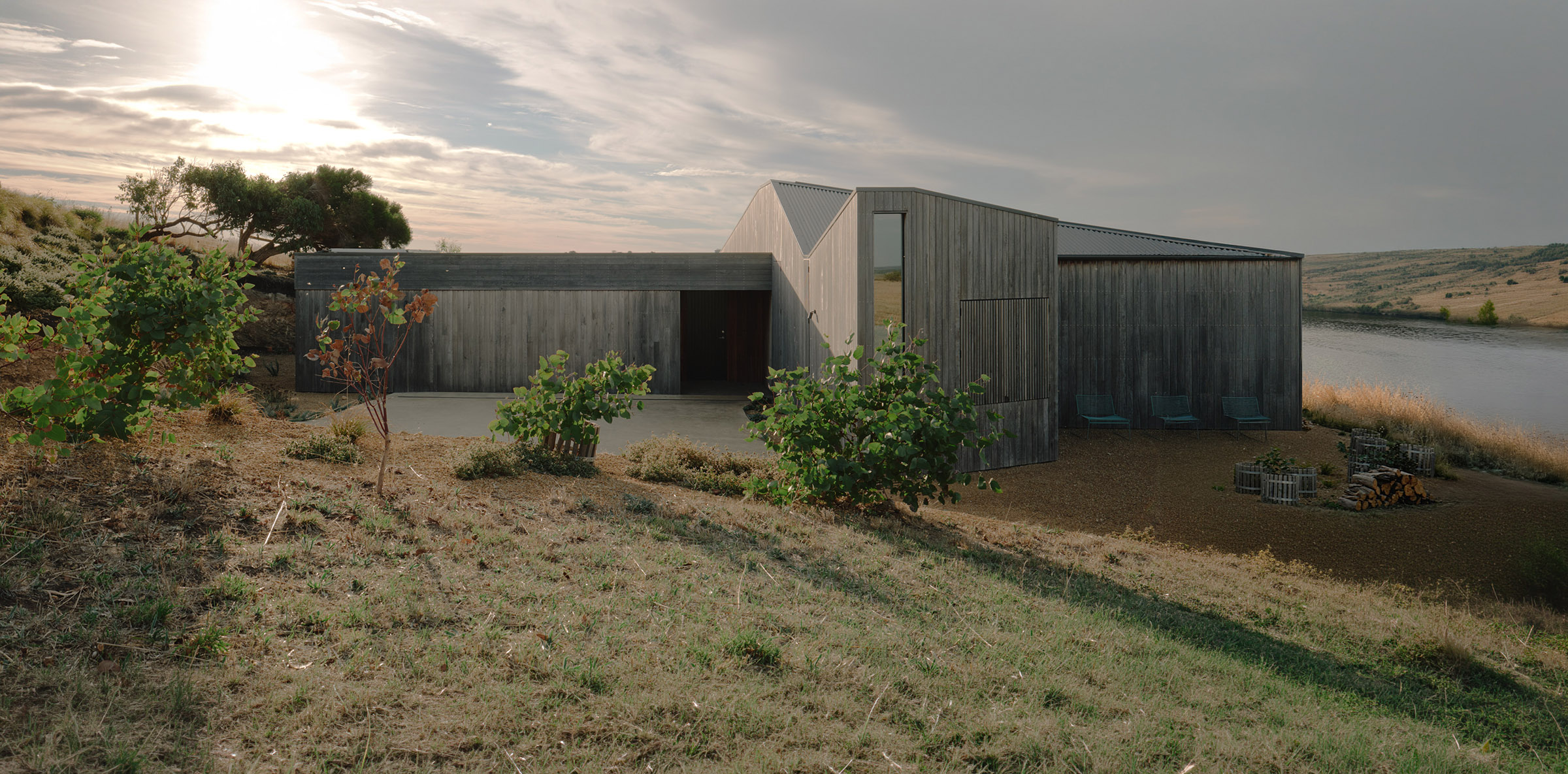
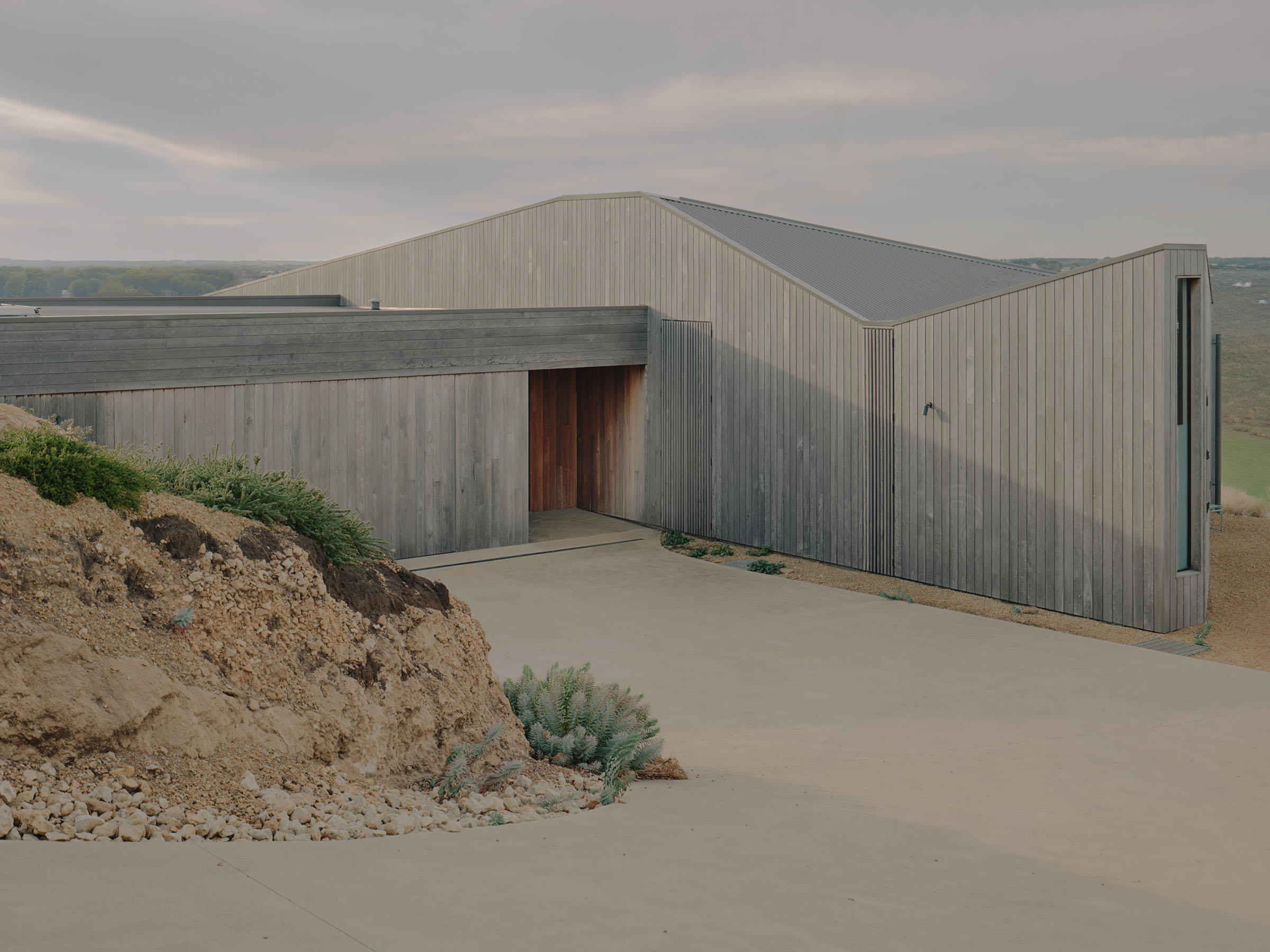
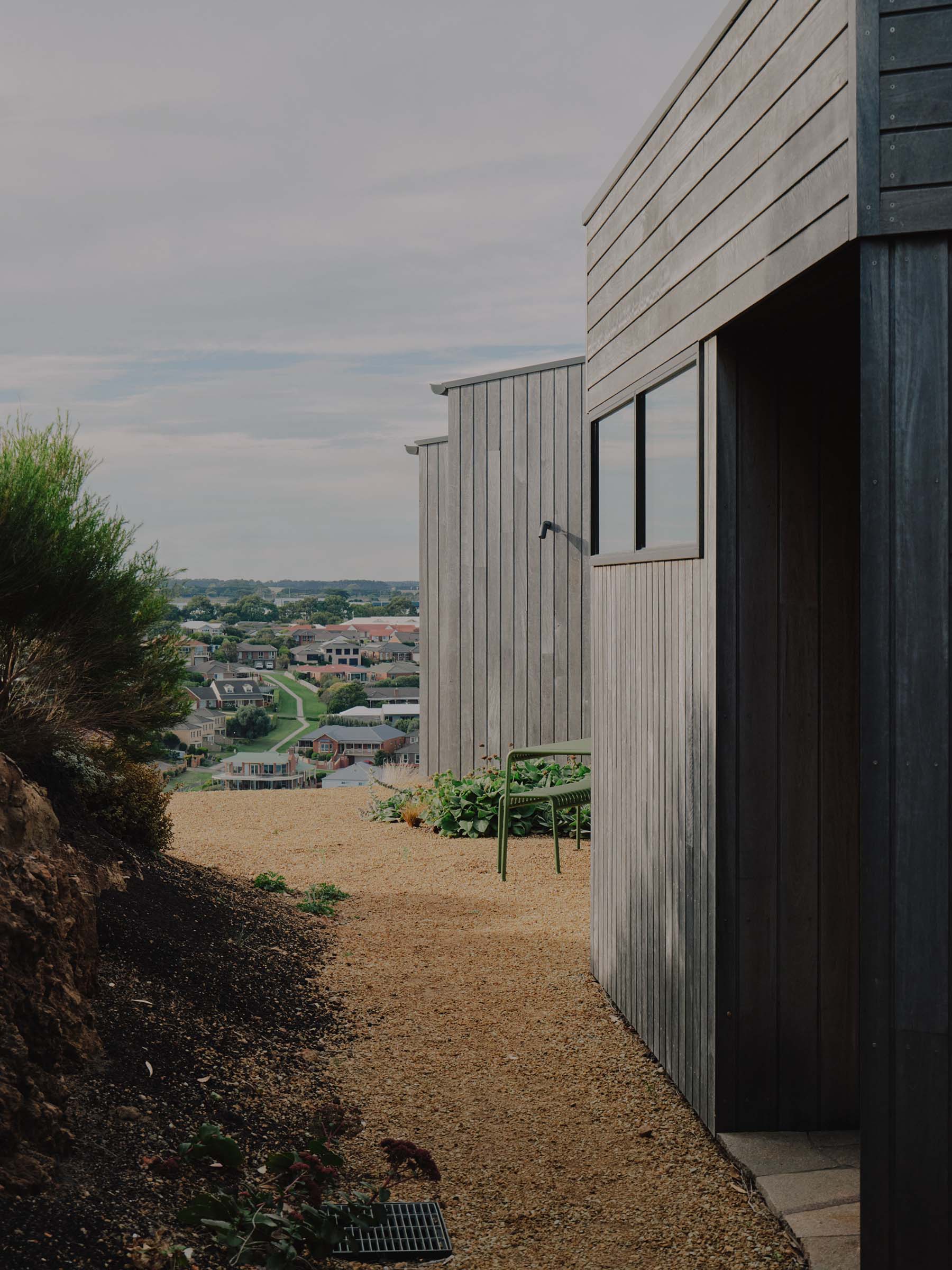
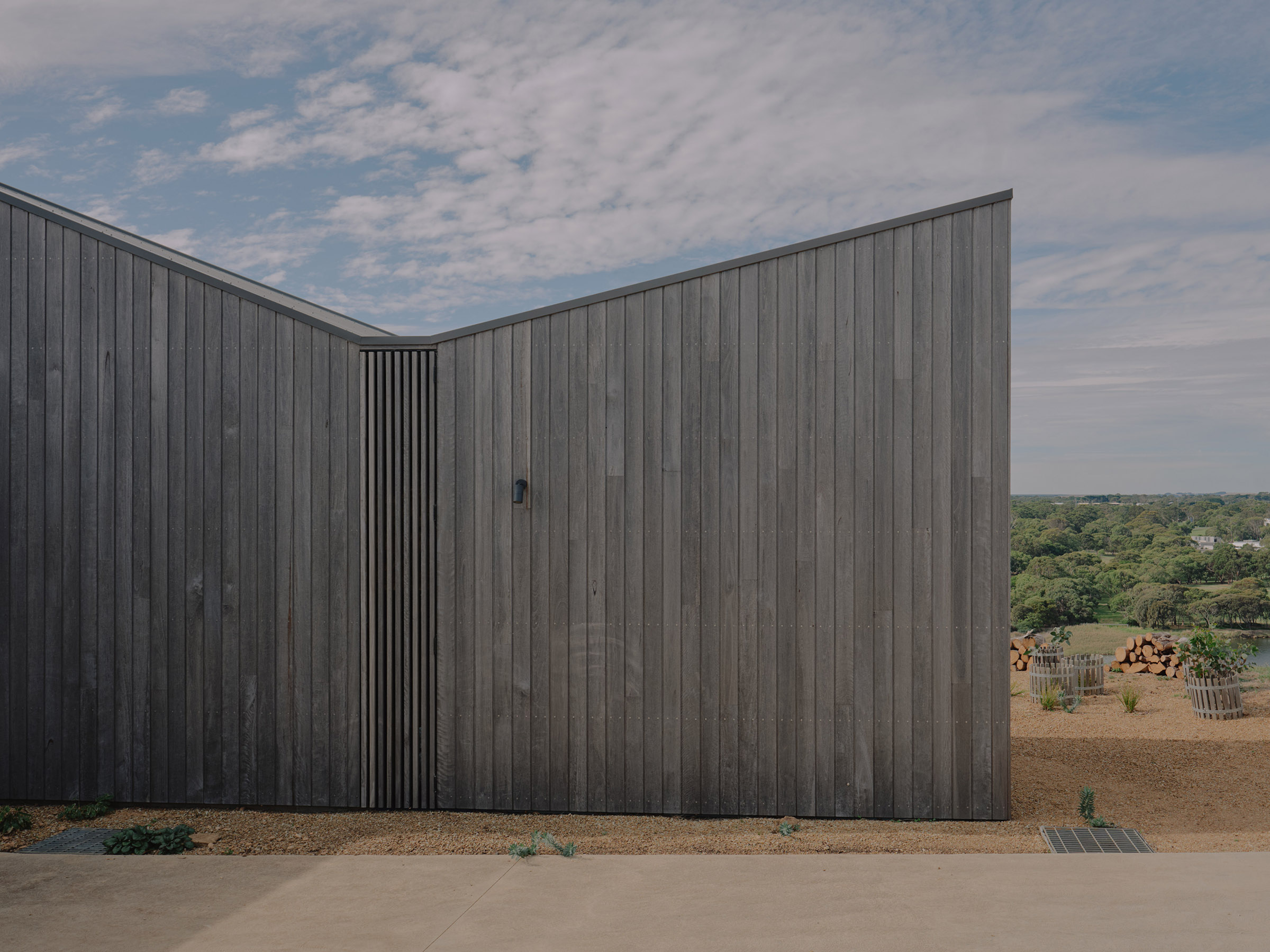
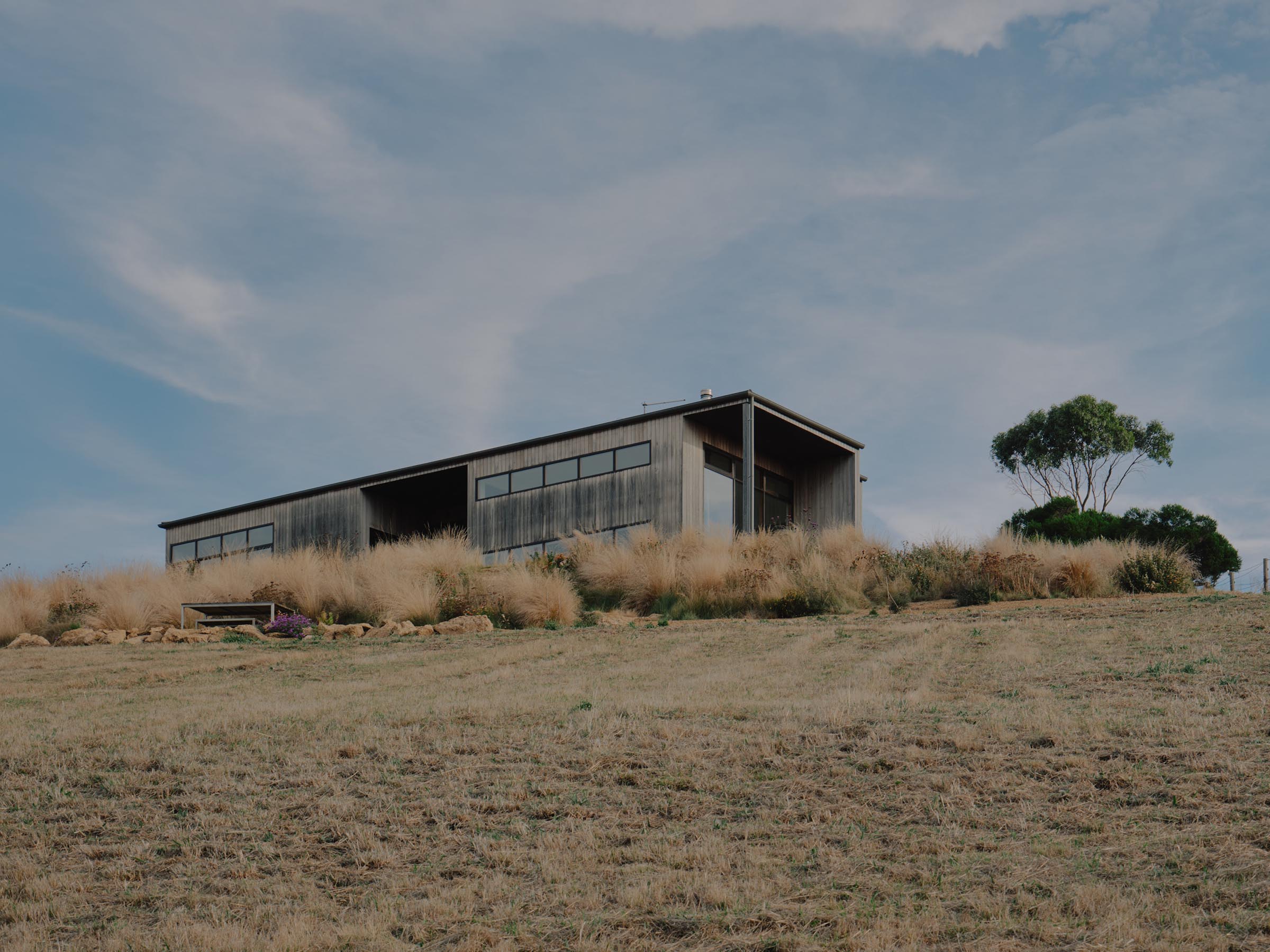
Set on a steep site overlooking the Hopkins River, the house sits quietly within the land. Hidden from the street, it reveals little on arrival, allowing the experience of the project to unfold gradually. The descent through the site, the changing levels within the home and the careful positioning of the building all contribute to a sequence of discovery, where the river is encountered slowly rather than immediately.
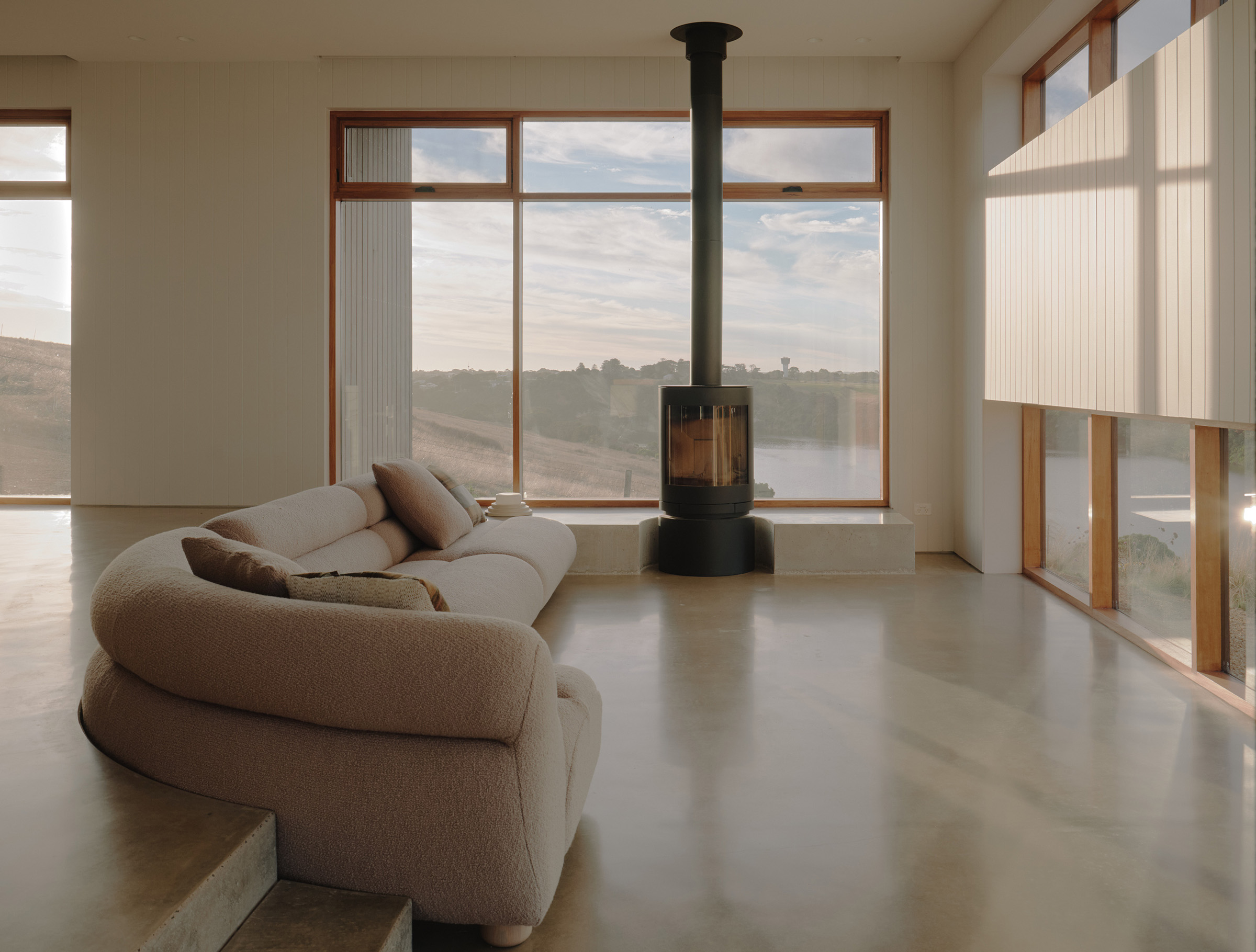
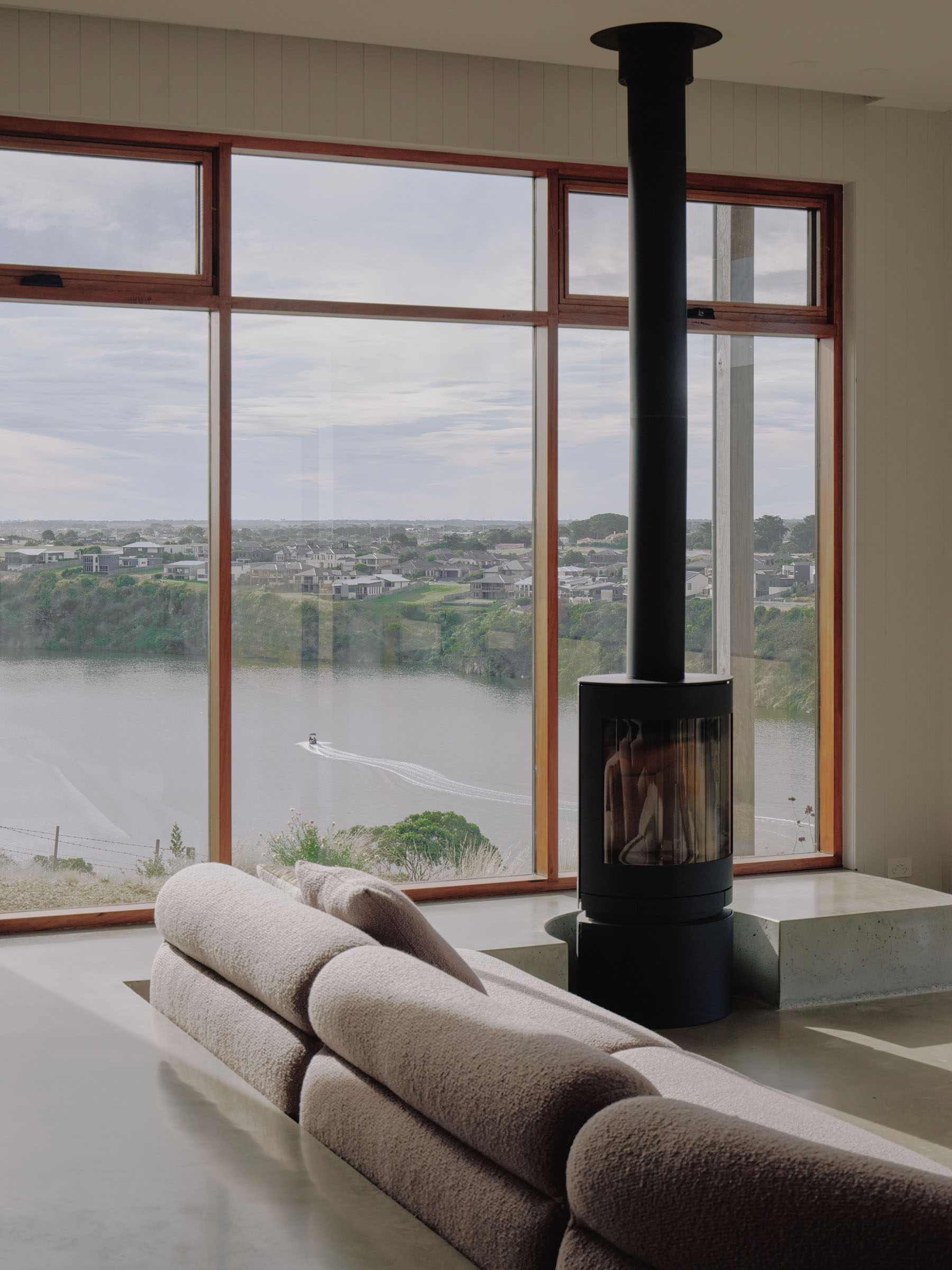
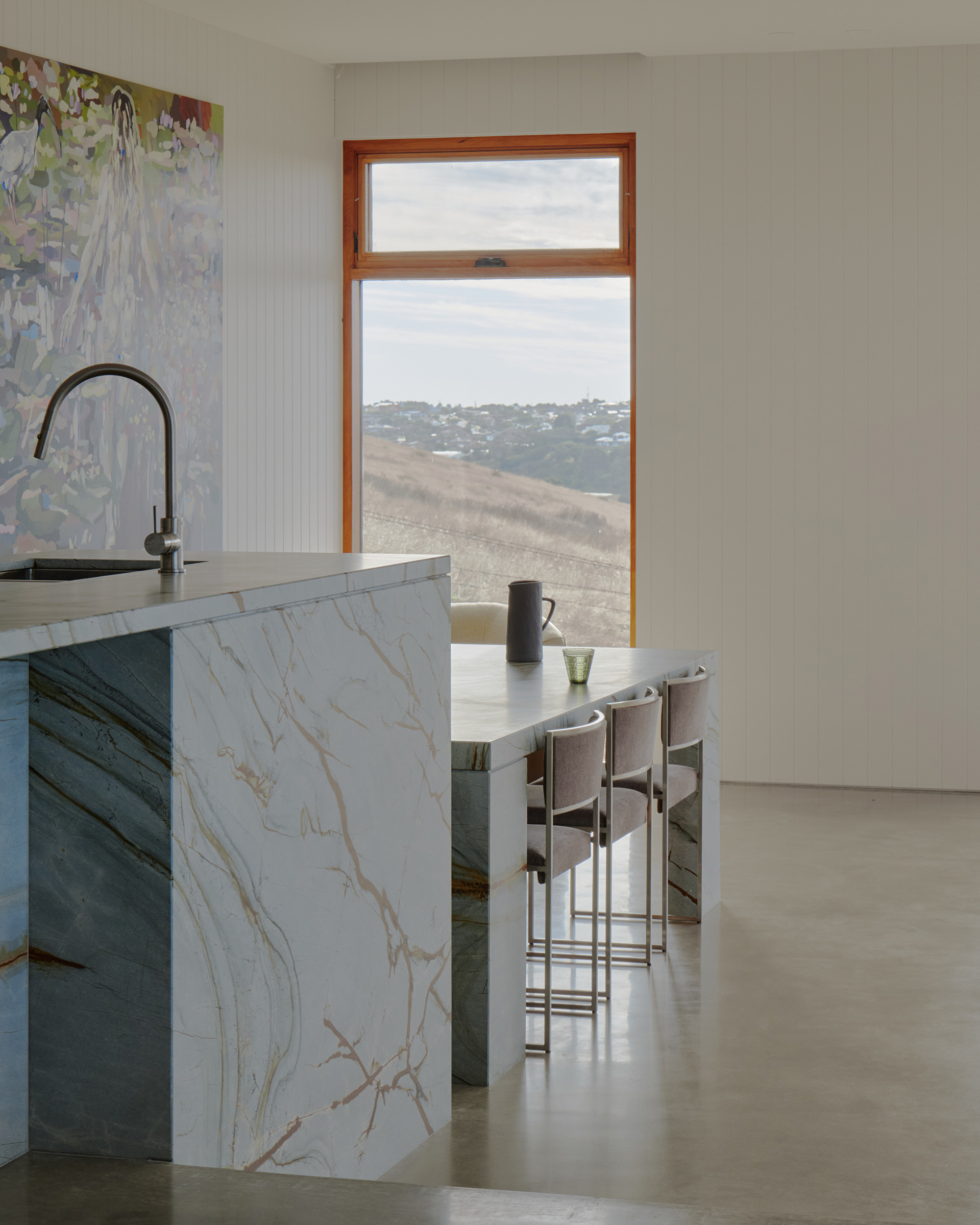
The form follows the topography. Rather than imposing a single level across the slope, the home steps with the land, allowing each change in level to strengthen its connection to the landscape. The kitchen occupies the highest point of the primary living spaces, looking across the river beyond, while a short flight of steps leads to the sunken lounge below, where a fireplace anchors the home through the cooler months. Together these spaces remain connected, yet each experiences the landscape from a slightly different perspective.
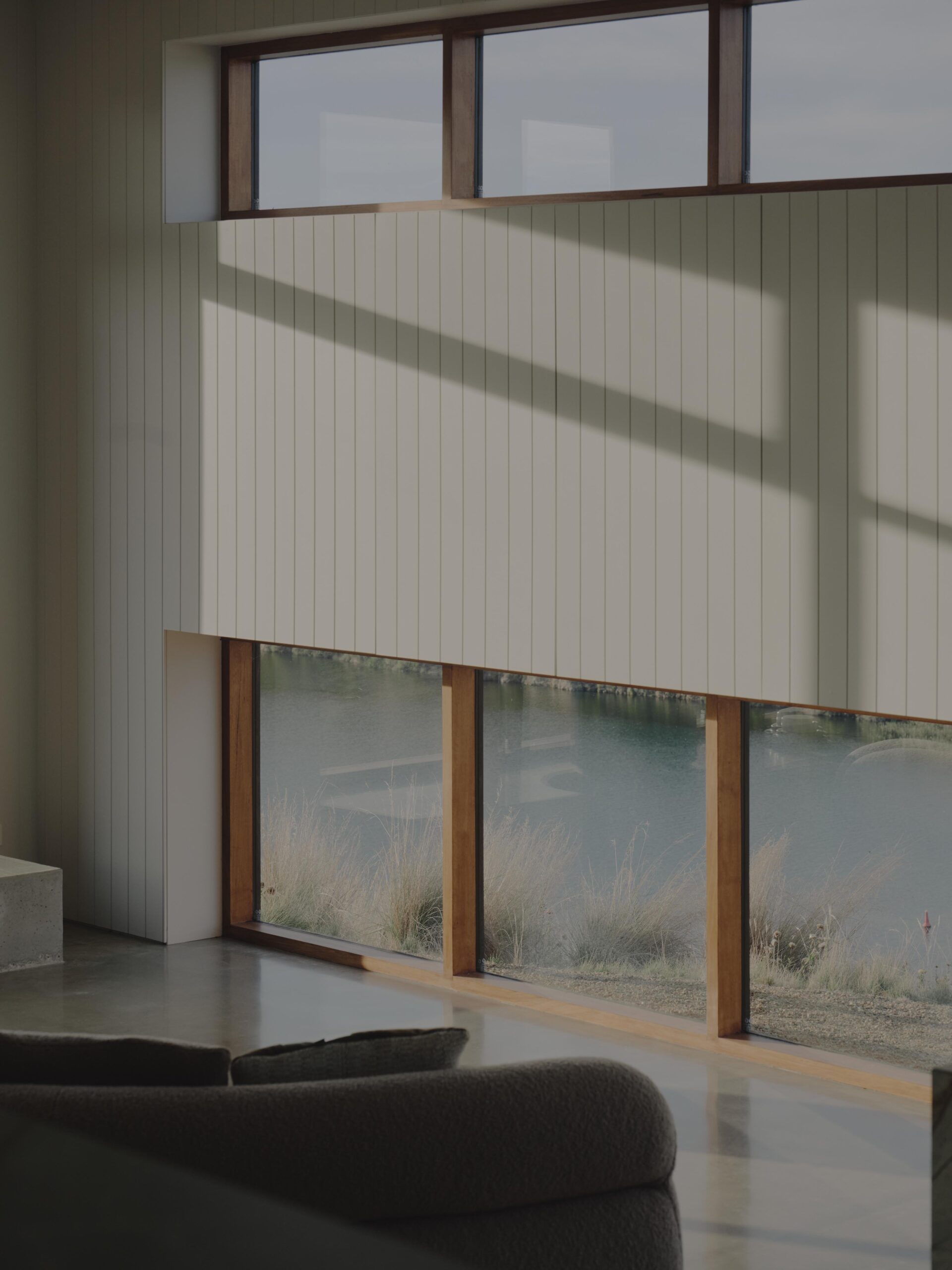
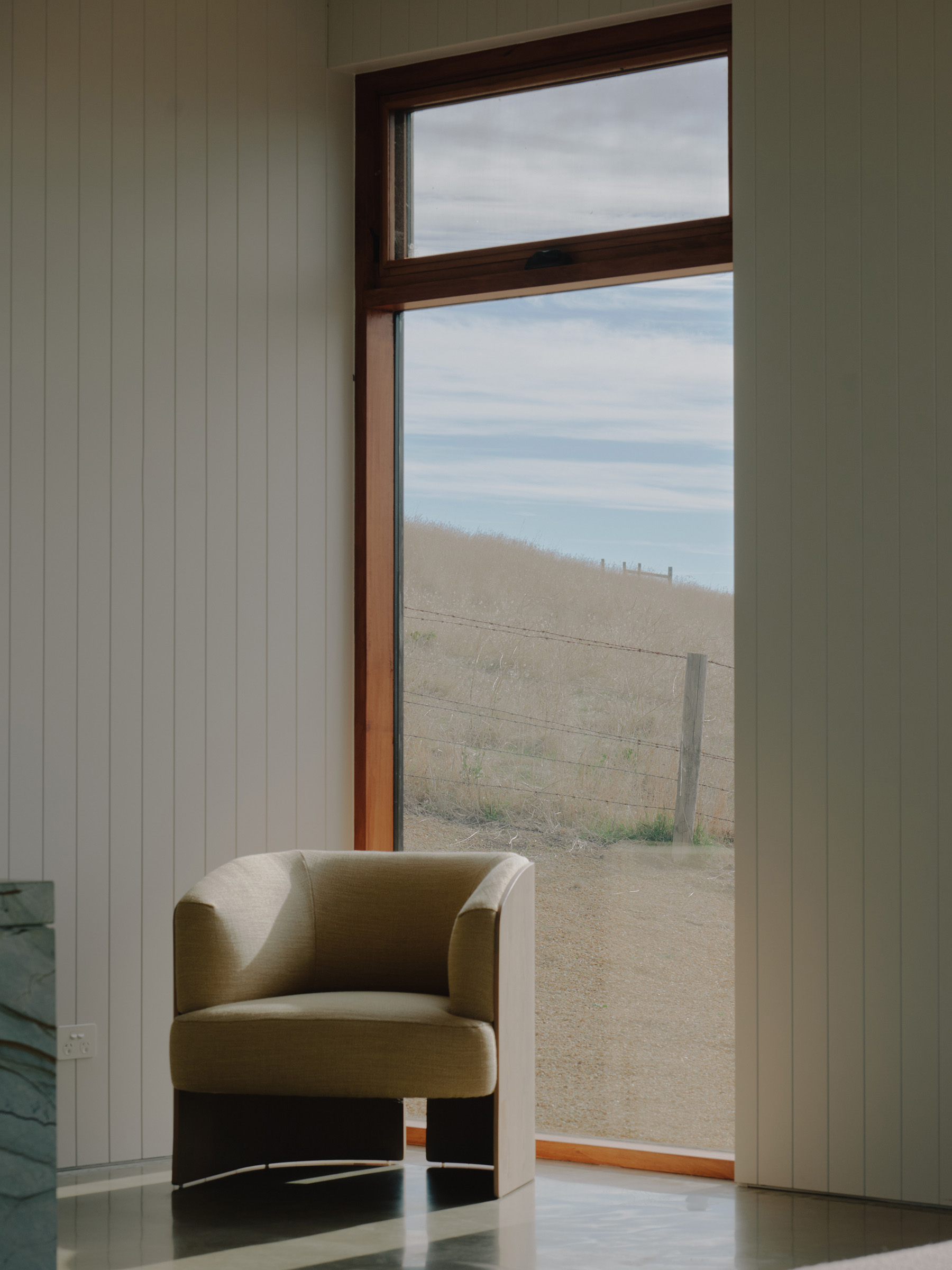
This sense of discovery continues through the way the home engages with its surroundings. Rather than maximising glazing at every opportunity, the intention was to establish a series of carefully framed outlooks that reveal the landscape gradually. The main bedroom greets the river each morning, while elsewhere openings capture moments of water, native vegetation and distant hills, allowing light and outlook to accompany the journey through the house. By resisting the temptation to reveal everything at once, each view retains its significance.
Although modest in size, the home provides everything required for a slower and enduring way of living. A generous primary bedroom, a guest room for visiting family and friends, and open living spaces create a home that feels calm, uncomplicated and deeply personal. Every decision was made with longevity in mind, allowing the house to support a lifetime of occupation rather than changing lifestyles.
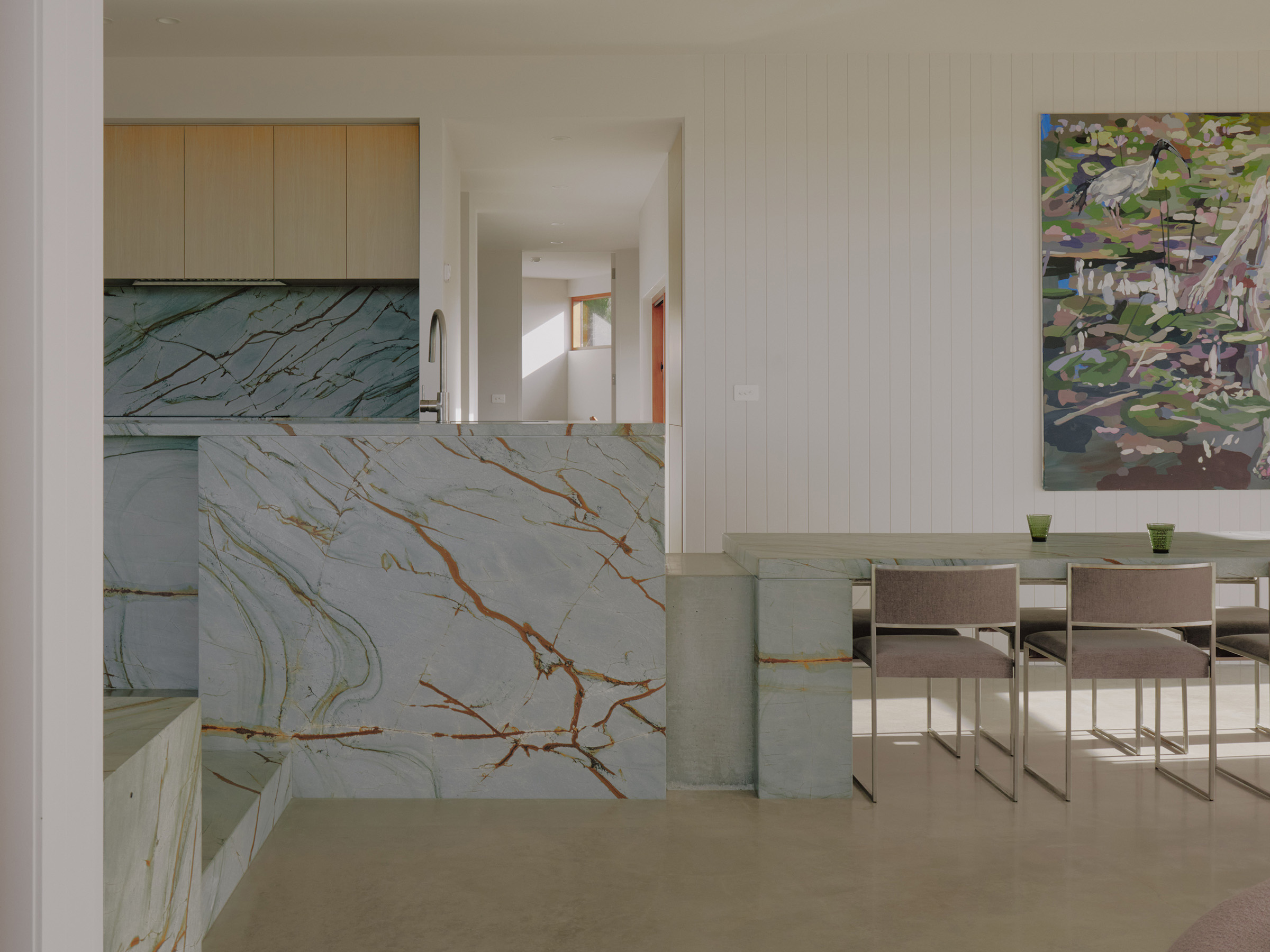
This sense of personal connection extends to the material palette. Natural materials were favoured throughout, their warmth replacing stark white finishes with softer, tactile surfaces that sit comfortably within the landscape. Timber, polished concrete and natural stone establish a restrained palette intended to age gracefully over time. The kitchen island is formed from Blue Roma quartzite, selected after the owner photographed native vegetation while hiking. Its layered colours quietly echo the surrounding landscape, bringing a memory of place into the centre of the home.
That same connection extends beyond the walls of the house. Rather than commissioning a landscape architect, the gardens have evolved through the owner's own care and attention, allowing the site to develop gradually over time. Native planting settles the house into its setting, attracting local birdlife while sharing the landscape with the kangaroos that regularly move through the river corridor. As the gardens continue to mature, the relationship between house and landscape will only deepen.
From the outset, the intention was to create a home that worked with its environment. The home draws upon its orientation, generous shading, natural ventilation and carefully considered material choices to remain comfortable throughout the changing seasons. Rather than separating everyday life from the environment, River House remains closely connected to it.
River House is ultimately a quiet project. It does not seek attention from the street, nor does it rely upon scale or architectural expression to define itself. Instead, its richness is found through sequence, restraint and an enduring connection to place. It is a home that reflects the landscape beyond its windows, and equally, the life of the person who chose to return there.