The Farm
Laura Tindall
Jessica Corbett
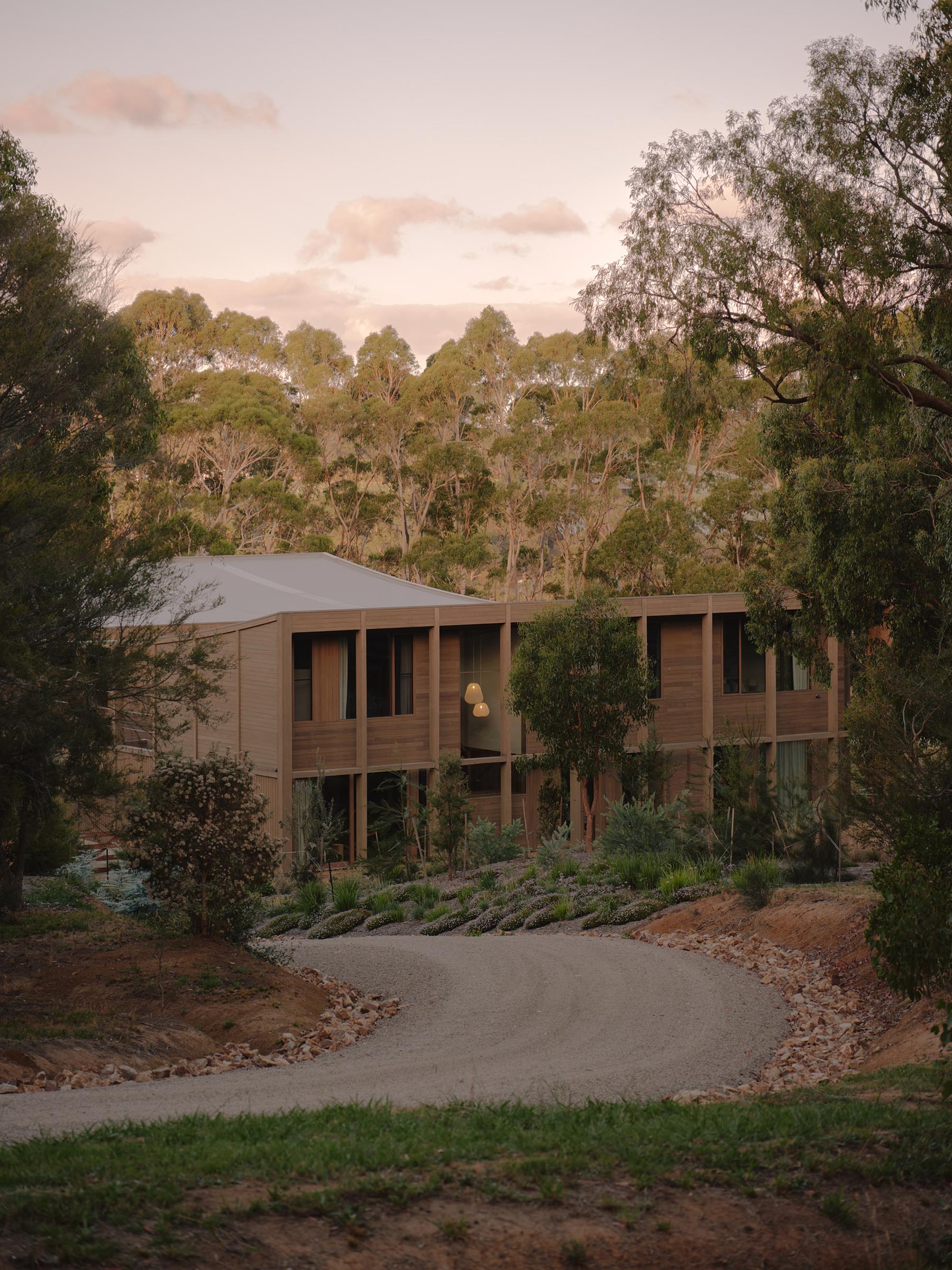
A descending, meandering track sensitively weaving its way avoiding the roots of majestic gums which dominate this landscape. Defining the arrival to the property and disappearing around the bend, it feels like entering into a native forest. The driveway pinpoints and frames views of the trees and, after a few minutes of corner turning we reach The Farm.
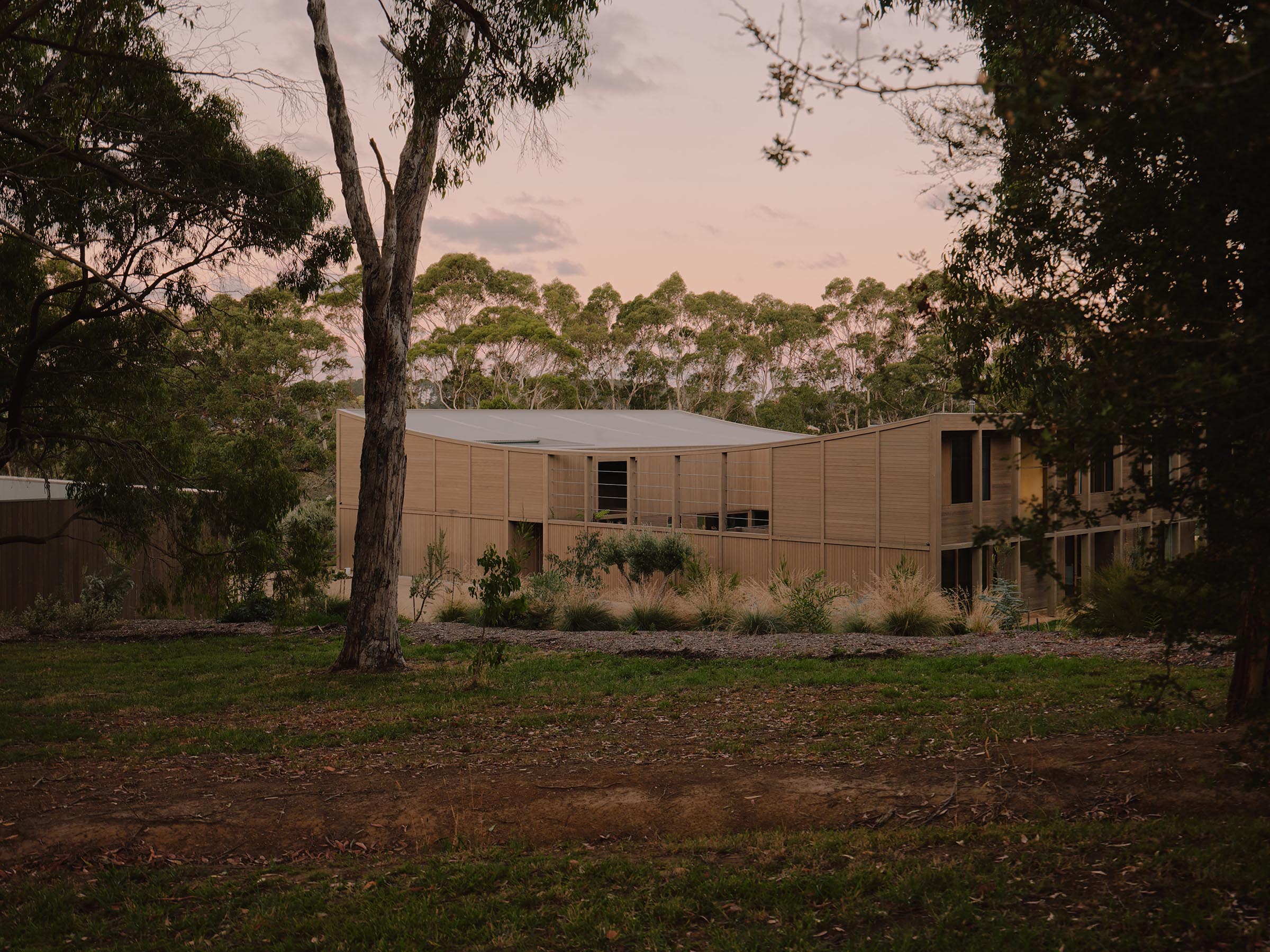
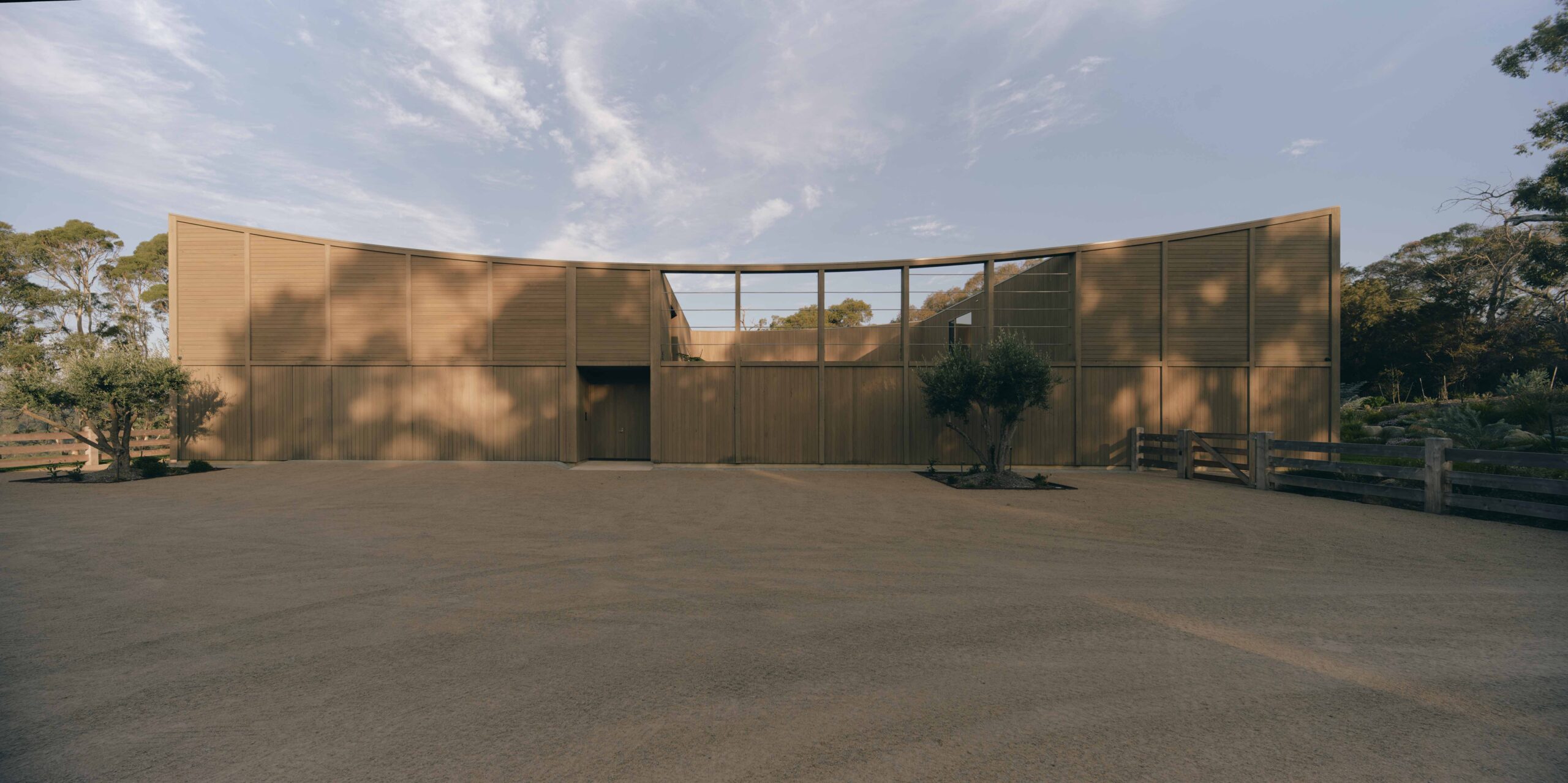
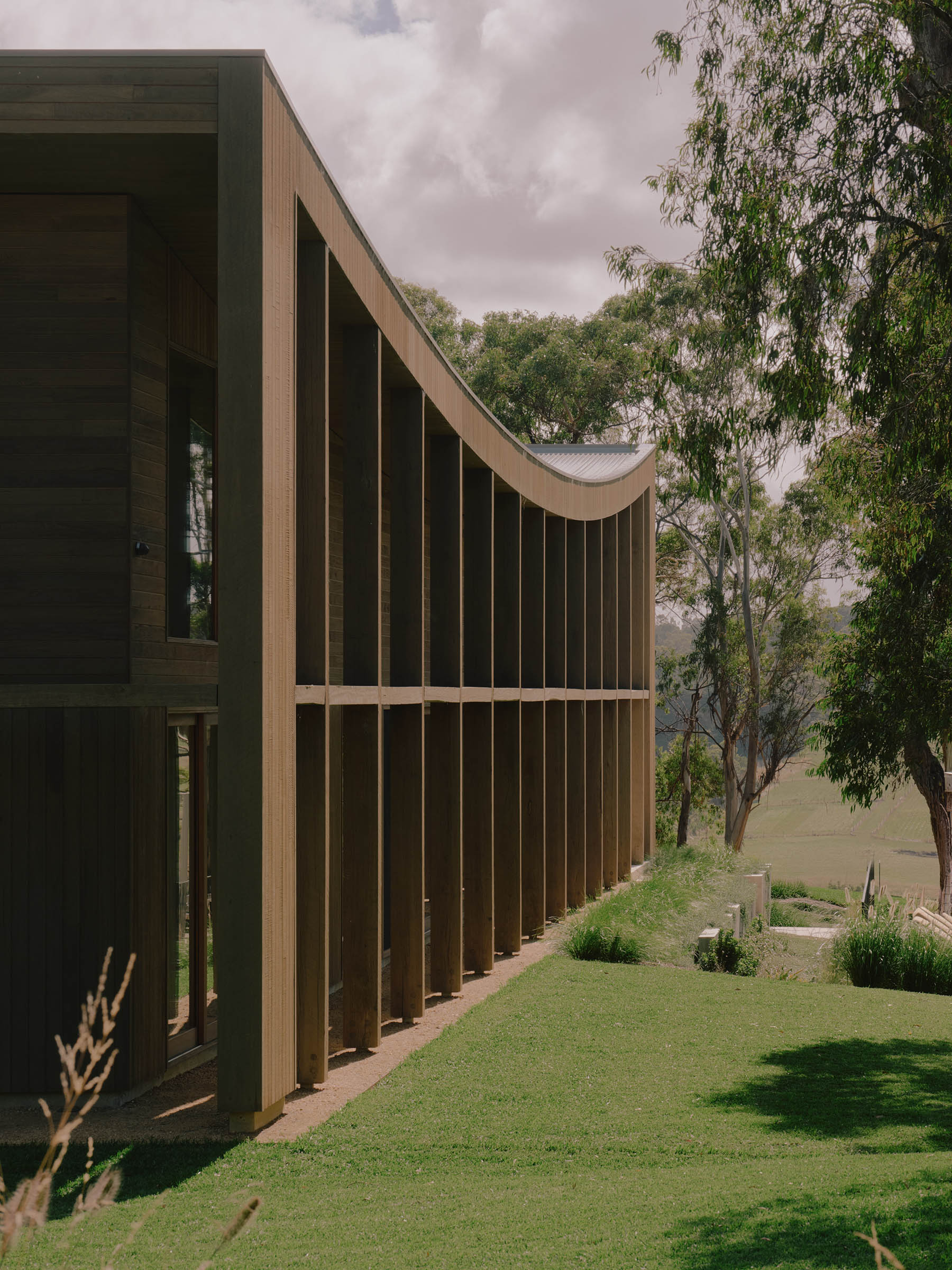
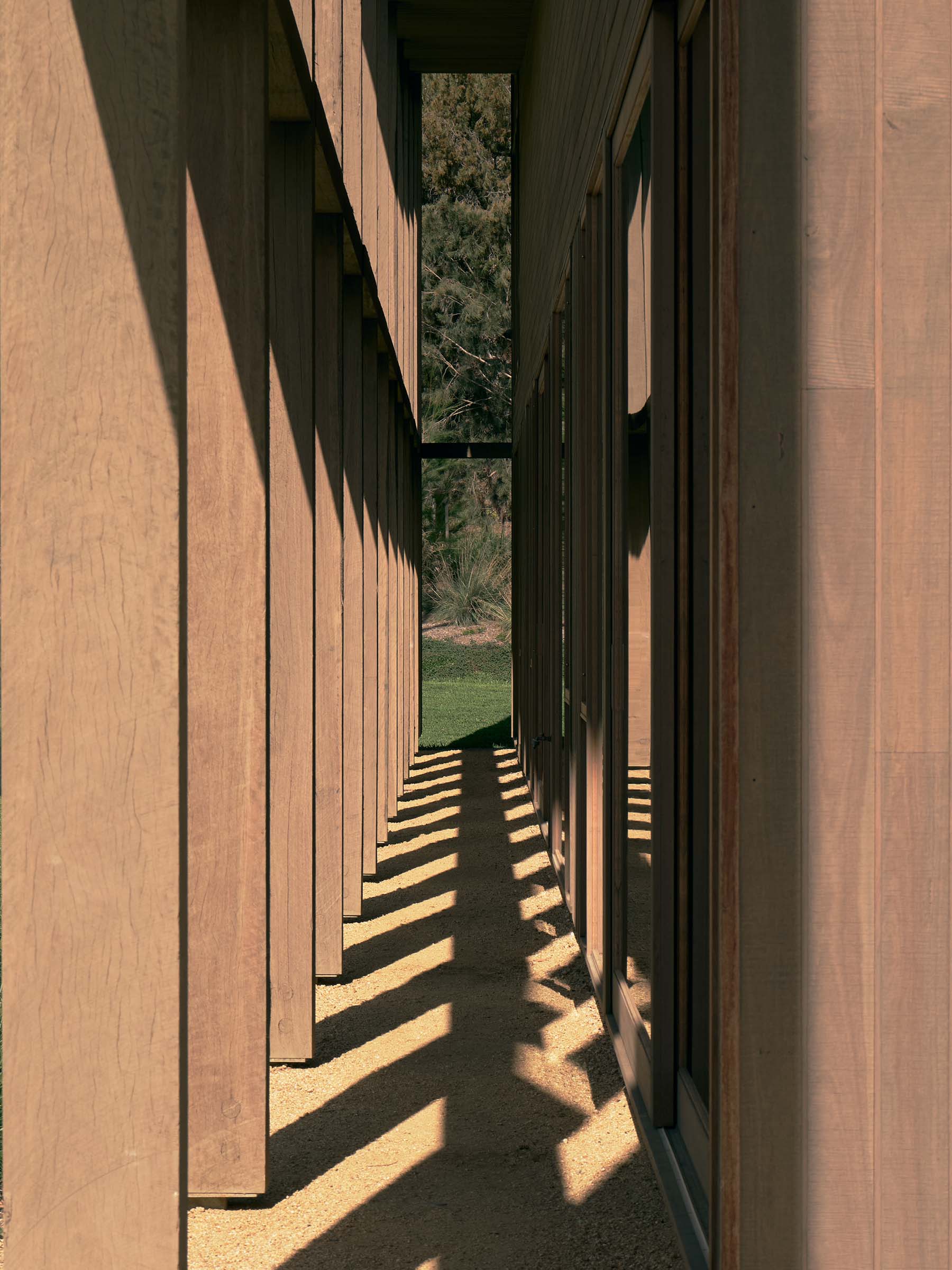
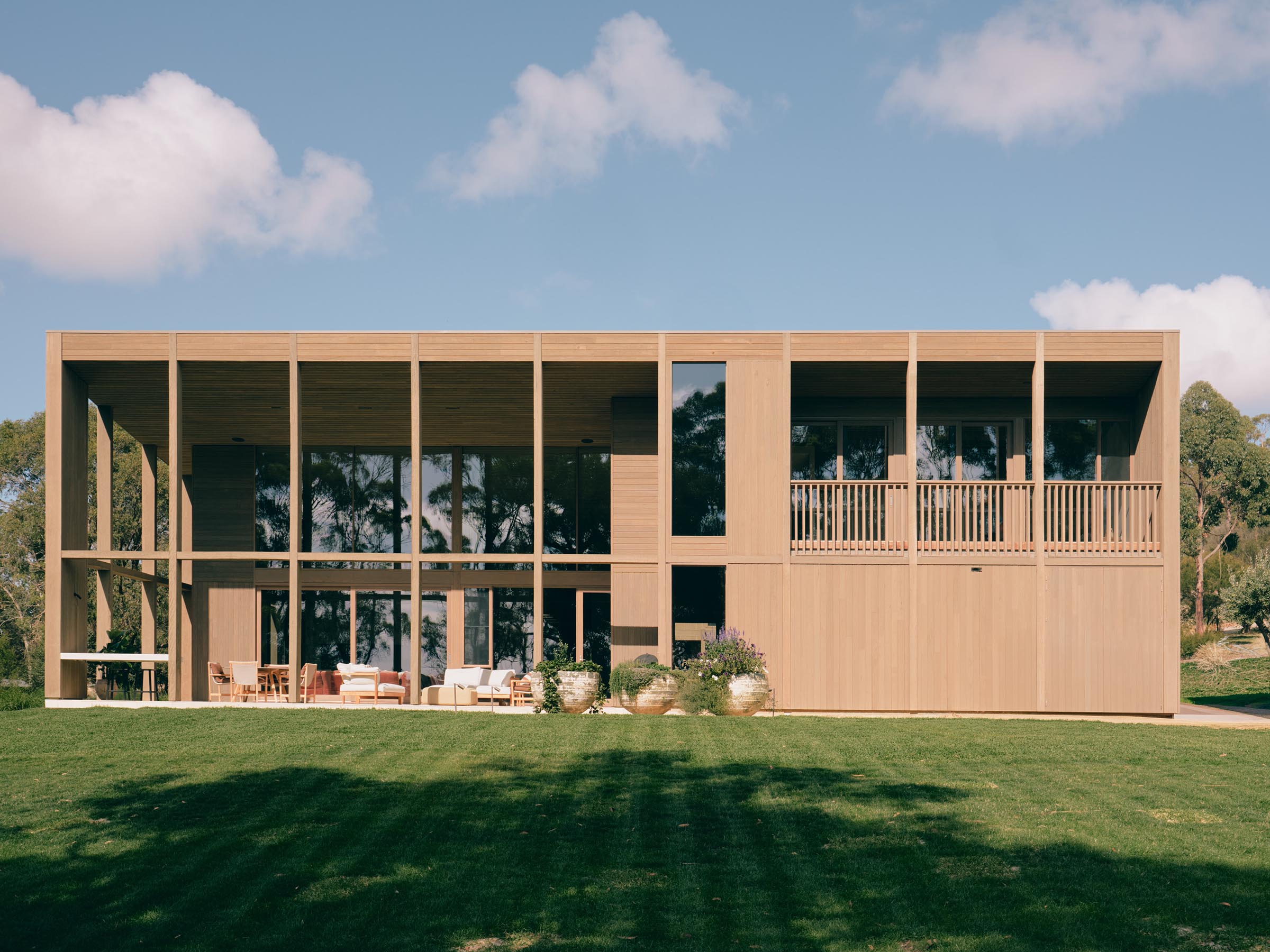
Revealed in our first vision is a somewhat delicate timber framed building, generous in scale yet articulated by an evident structural grid of blackbutt posts and beams beneath an inverted radial roofline. Beyond the forecourt a timber clad shed sits opposite the house.
Farmhouses typically evolve into collections of buildings over a period of time, commonly a stack of sheds and utilitarian structures arranged by logistical means around one building that would be the home, the living quarters. Usually identified by a more substantial means of construction, commonly with gear and stuff lying about. Over many years, this is a key image I have built, representing the Australian farmhouse.
The project served as an opportunity to reconsider and future plan to manage all the needs for a 50-acre property to be provided in no more than two structures, one house and a shed which share a generous forecourt.
Green Wedge Zone planning challenges restricted around remnant biodiversity requirements and the threats of wildfire attack impacted the location and availability of usable land for the establishment of the dwelling precinct.
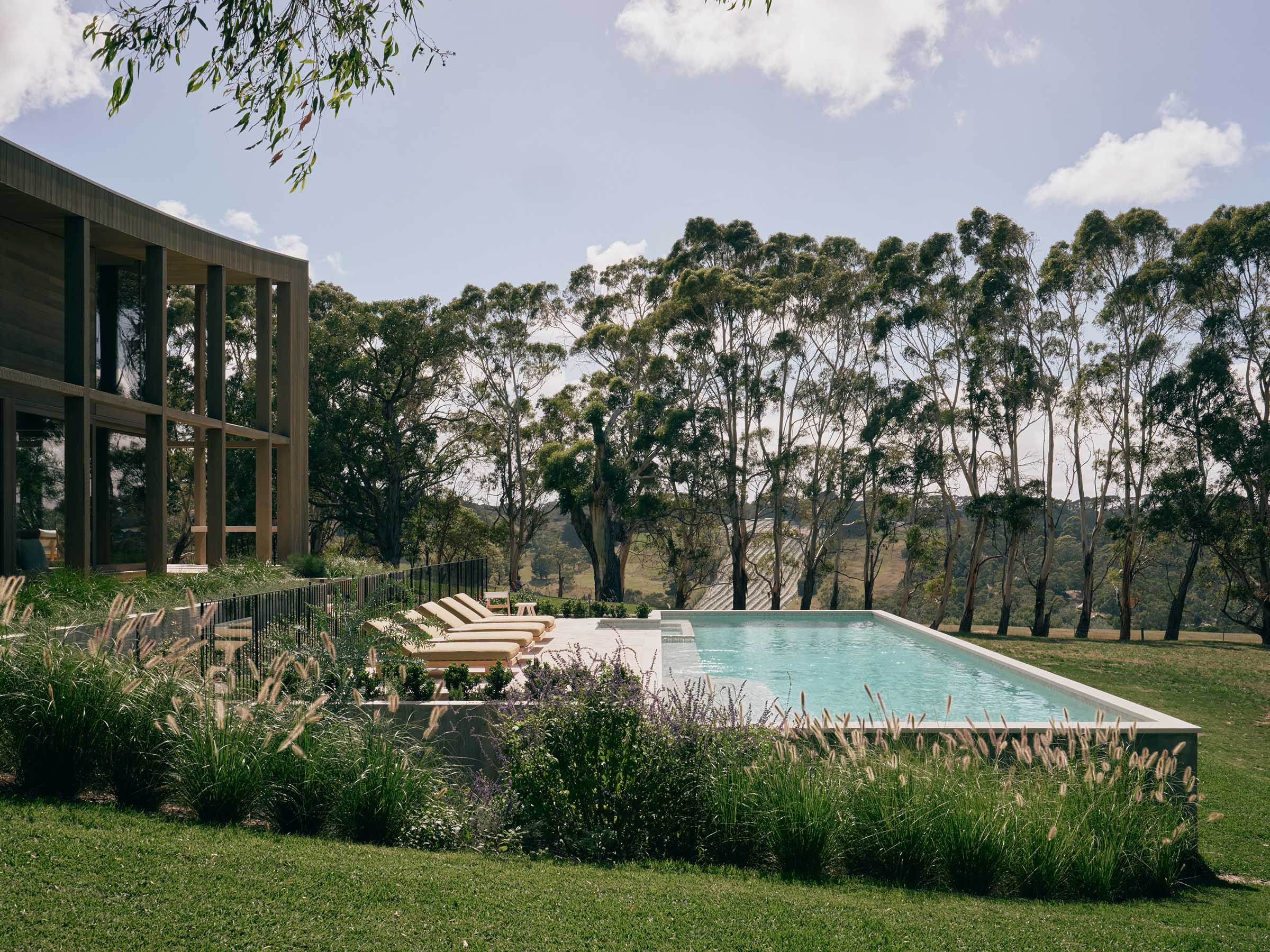
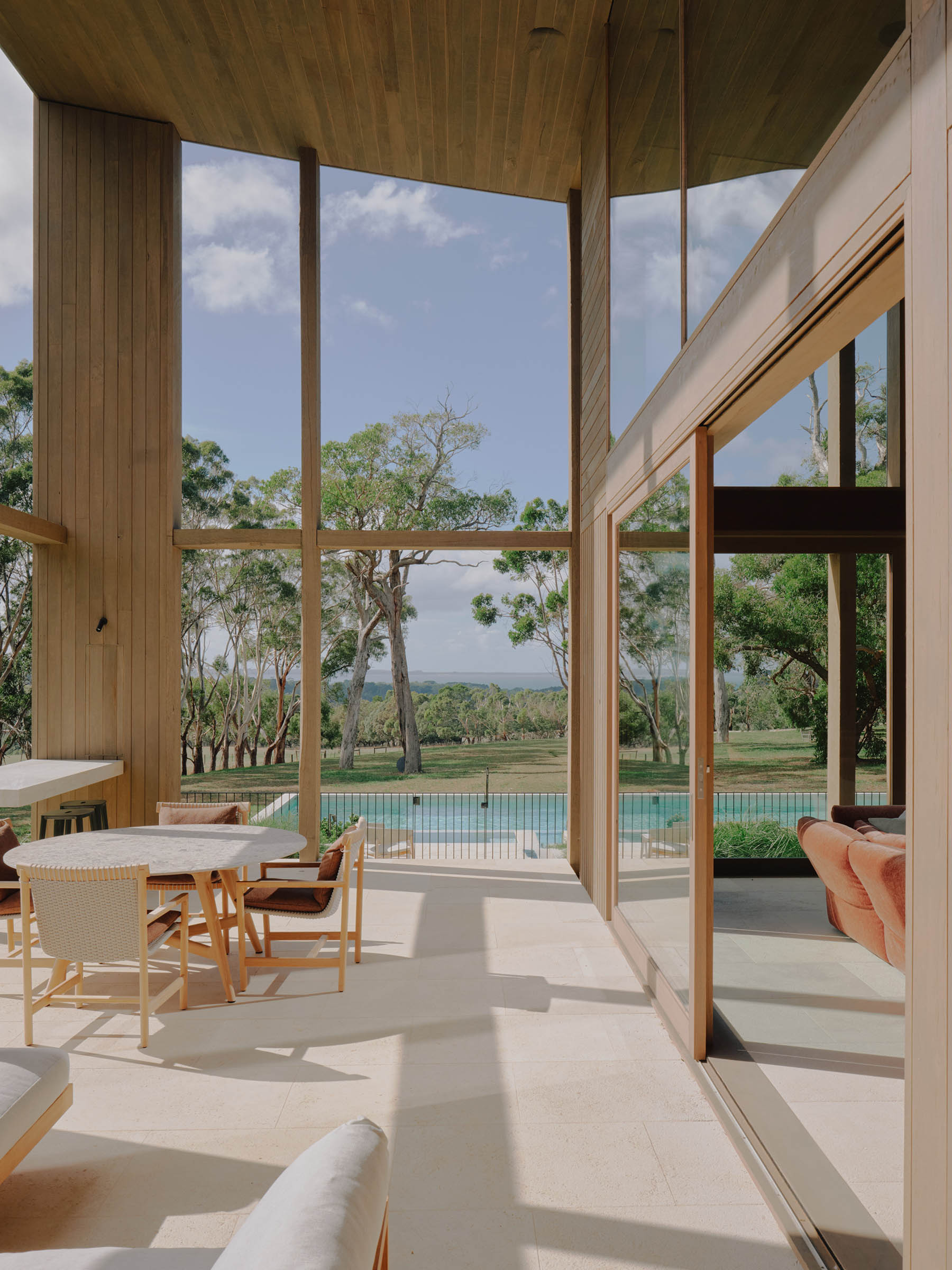
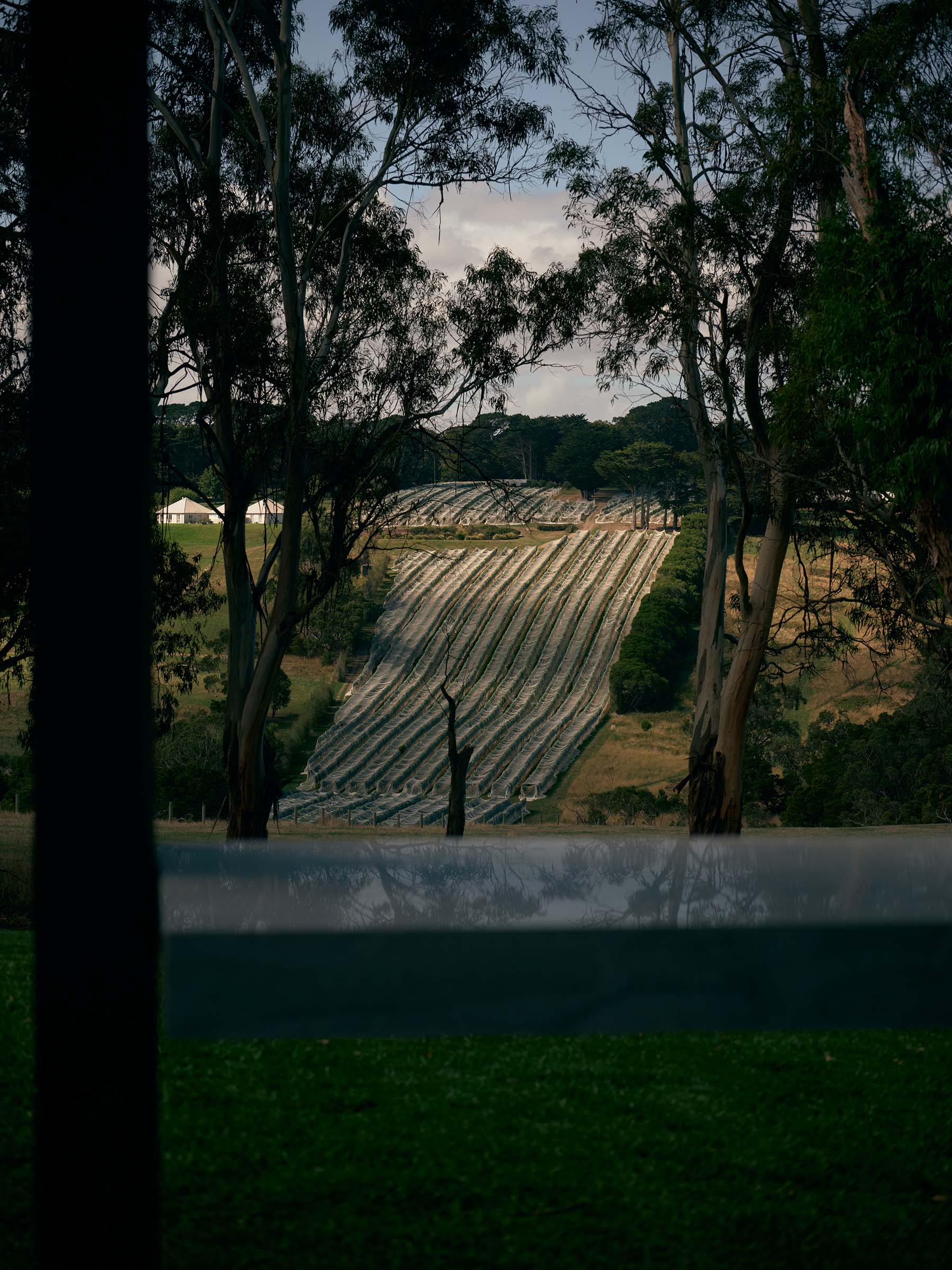
Within a limited footprint to locate these two key structures a rectilinear series of plan arrangements formed up either side of a generous driveway forecourt. To the south is the main dwelling, a timber framed double storey structure that commands its presence via an expansive rectilinear floor plan that reaches beyond the forest edges towards pasture and ocean views to the south.
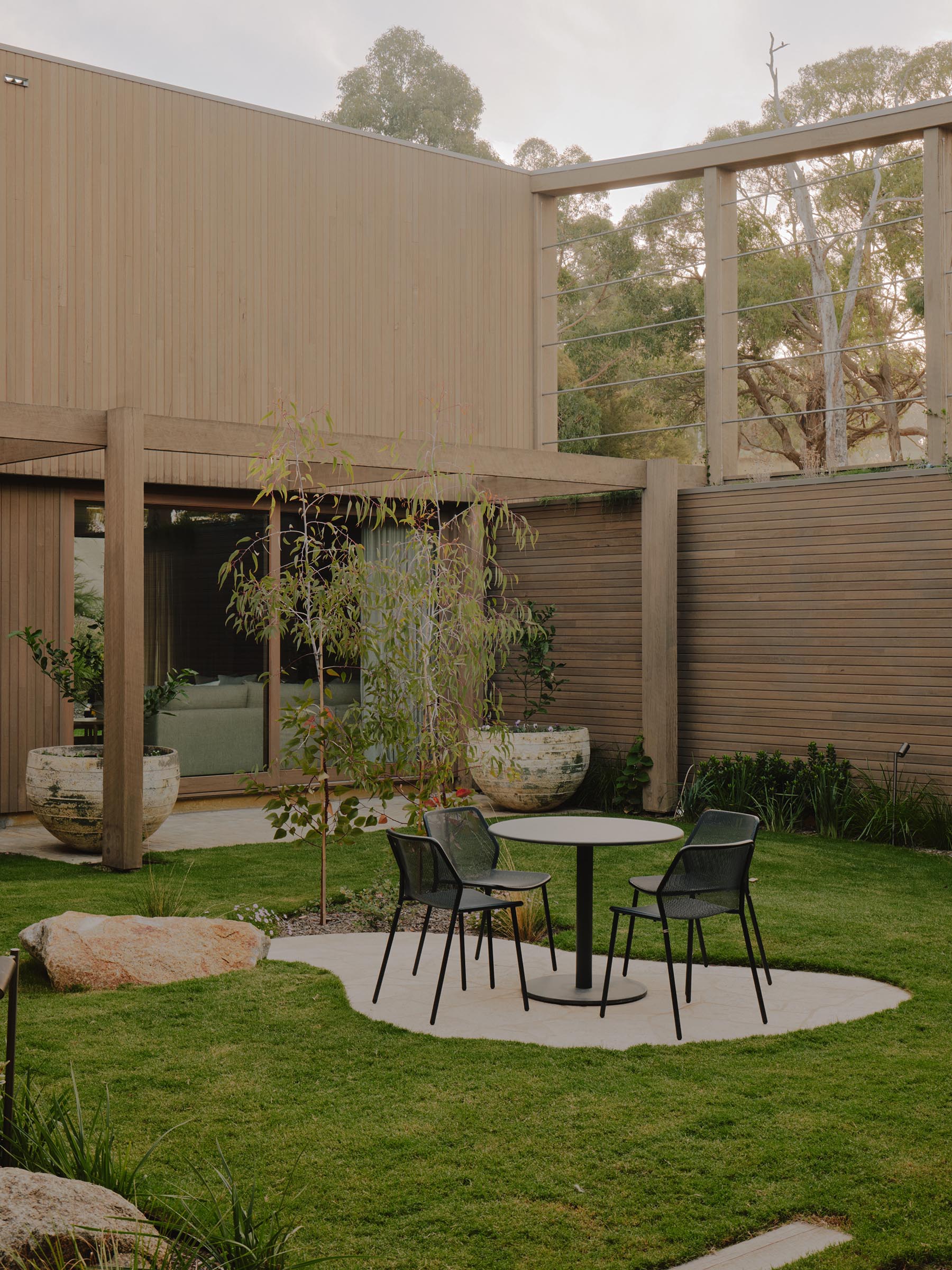
The Farm represents a bold ideal and delicate touch in one. The overall encompassing of the home’s needs beneath an inverted curved roof conveys a lightness to an otherwise expansive footprint, gesturing its sense of belonging, as part of its landscape. Within the footprint are contained the internal spaces, a range of protected and less protected outdoor spaces, carparking and an offset core private courtyard. Placed adjacent the entrance, the courtyard serves as a source of northern light into the living space and a green space that is disconnected from the wilds of the natural landscape surrounding the home. Granted its own sense of scale, this kitchen garden type of space is plush, free of snakes and a good space for dogs to roam.
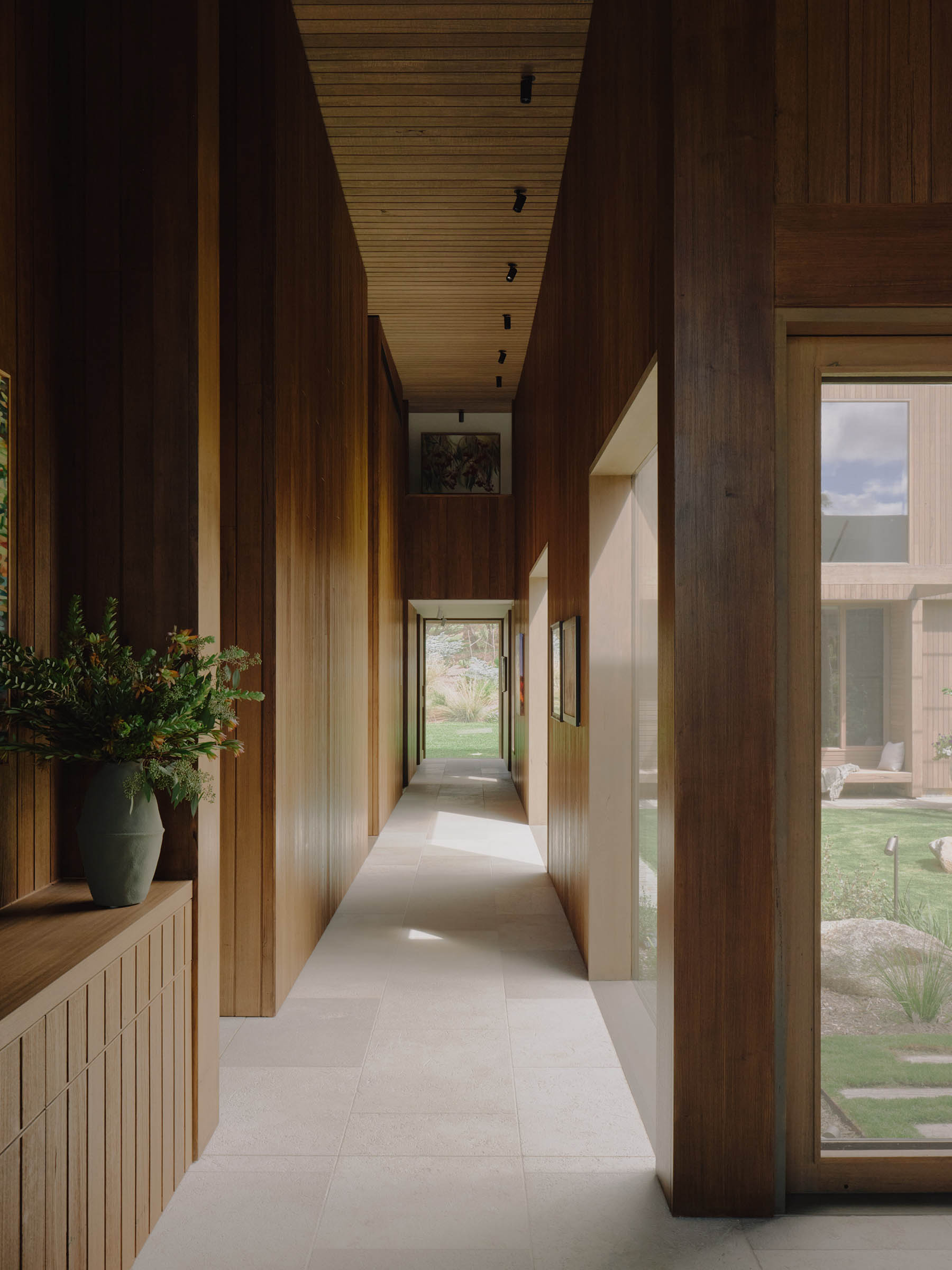
The sense of discovery and surprise that visitors find on arrival is intended as the journey continues within. Rectilinear internal pathways link sleeping areas with living spaces and seek to offer reflective points, opportunities to pause along the way.
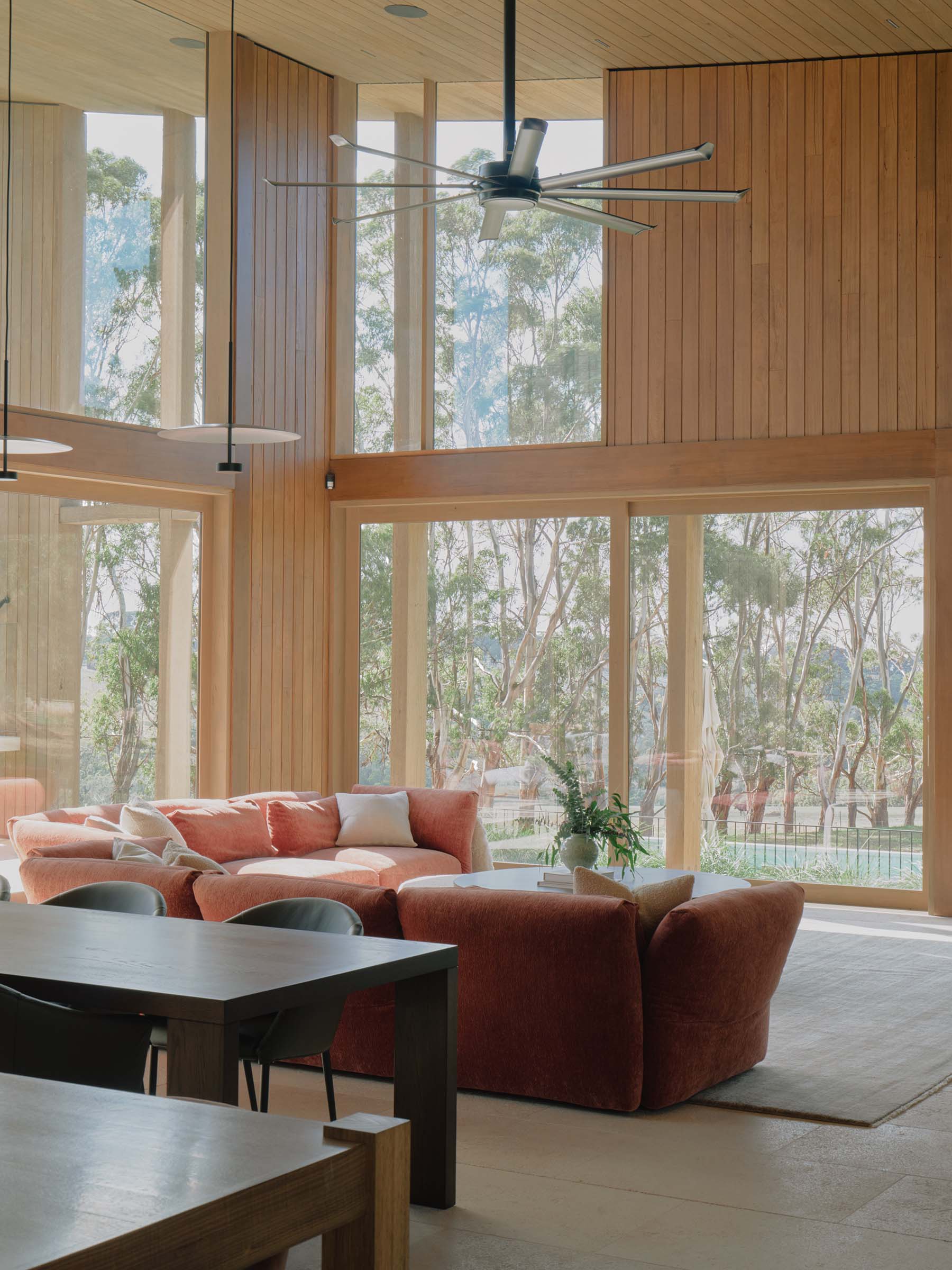
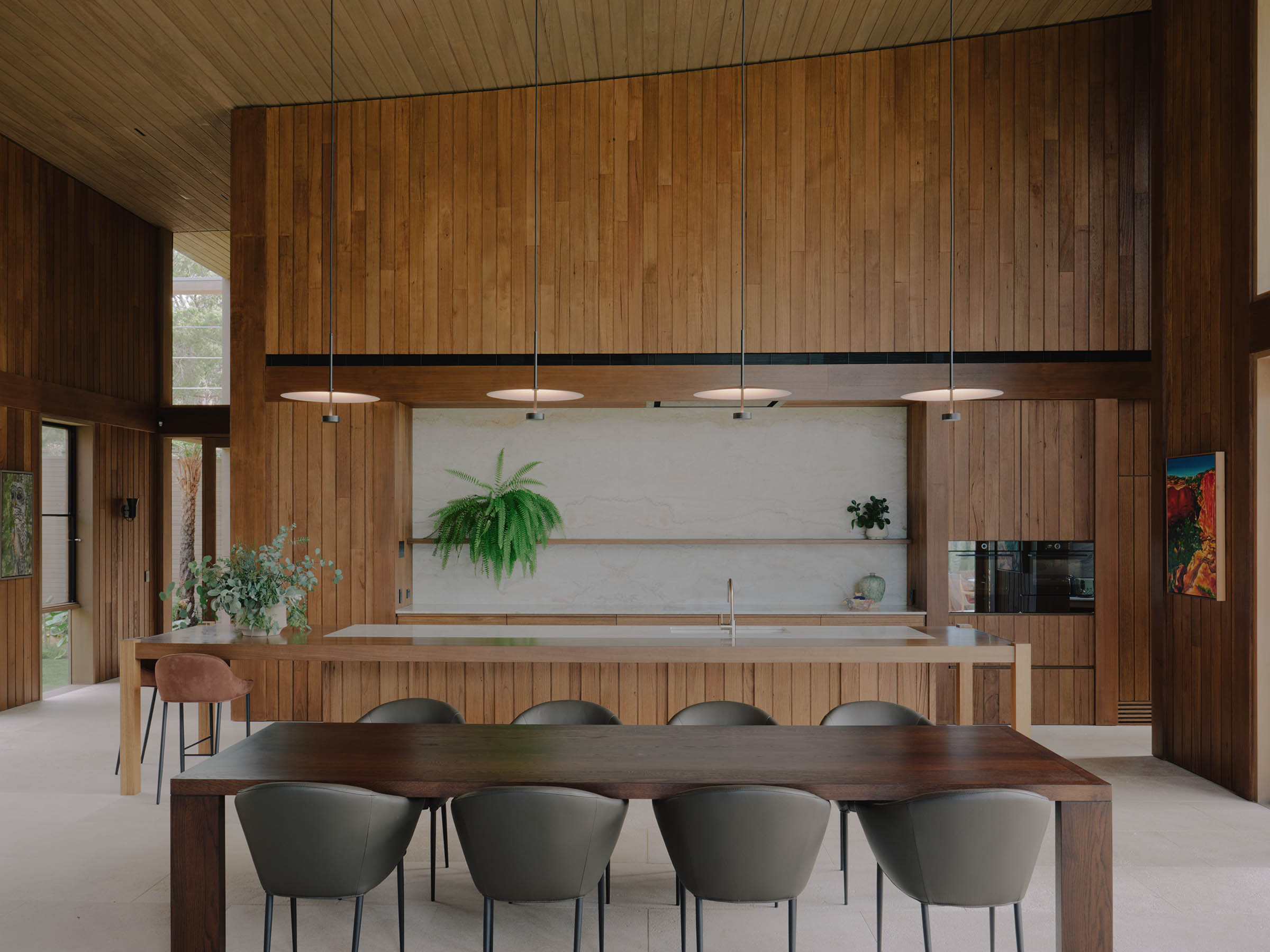
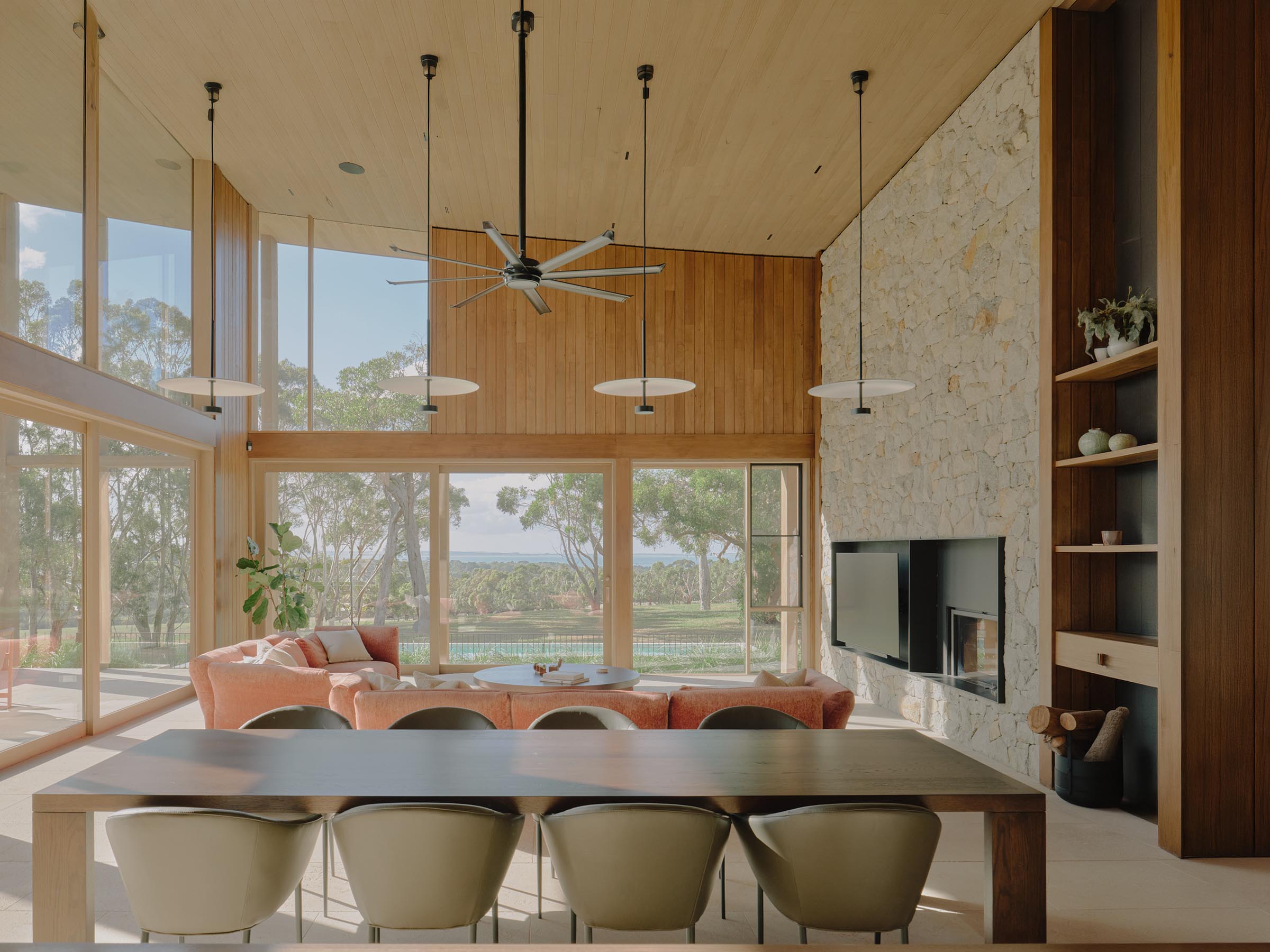
The floorplan itself is an expansion of the grid which is evident through a large blackbutt framed façade treatment. All rooms conform within the framework and sit below the curved radial ceiling, timber lined and floating above soaring ceilings throughout living areas.
From the exterior, the inverted roof is a form that reaches to the sky at two ends, in both cases revealing full canopy outlooks to existing gums that serve to respond to the vast scale of the big skies and to bring this sky, together with the surrounding trees, right into the home. When the senses are awake, the occupants may feel the fullness of nature from within the protection of the interiors.
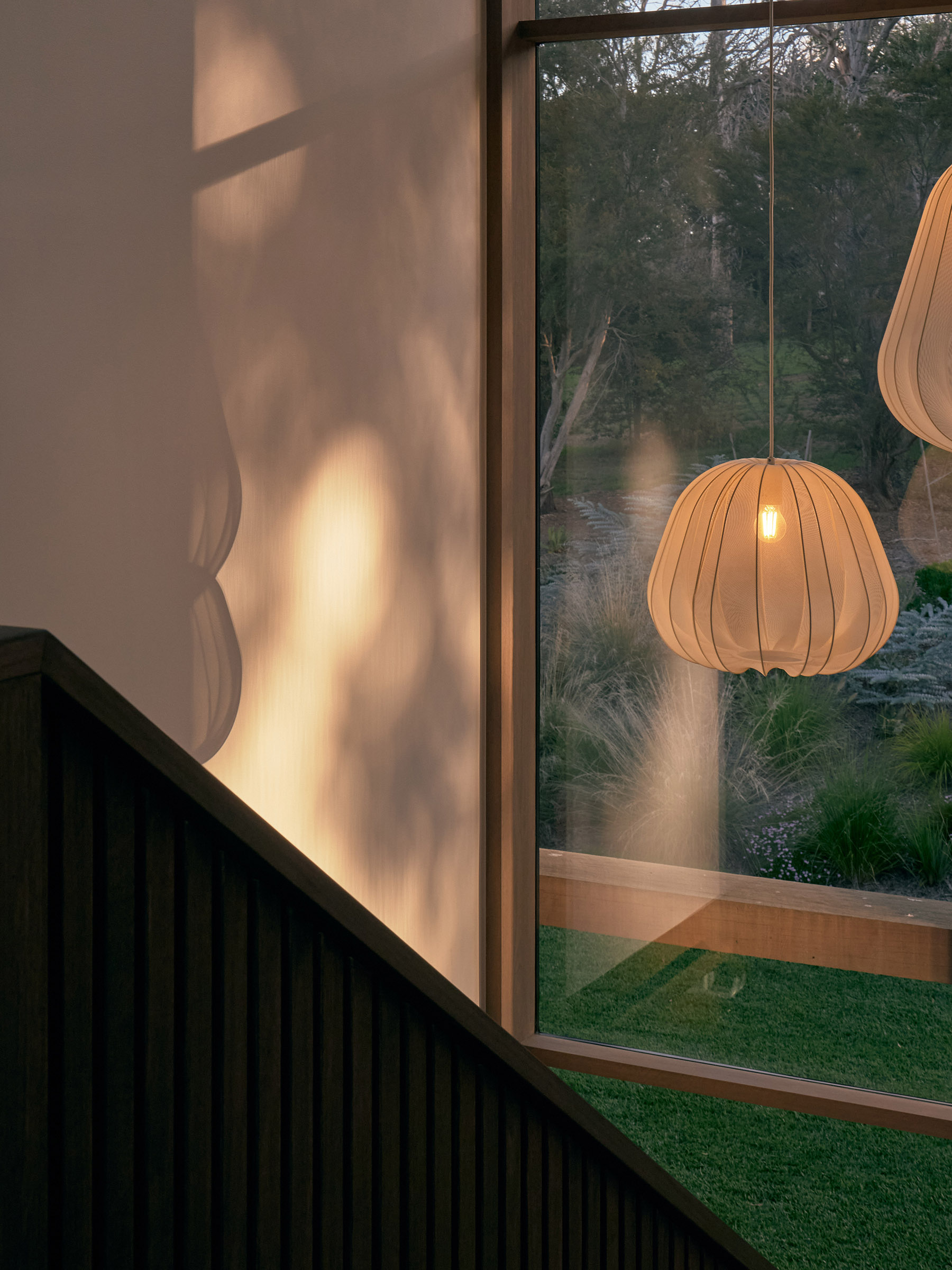
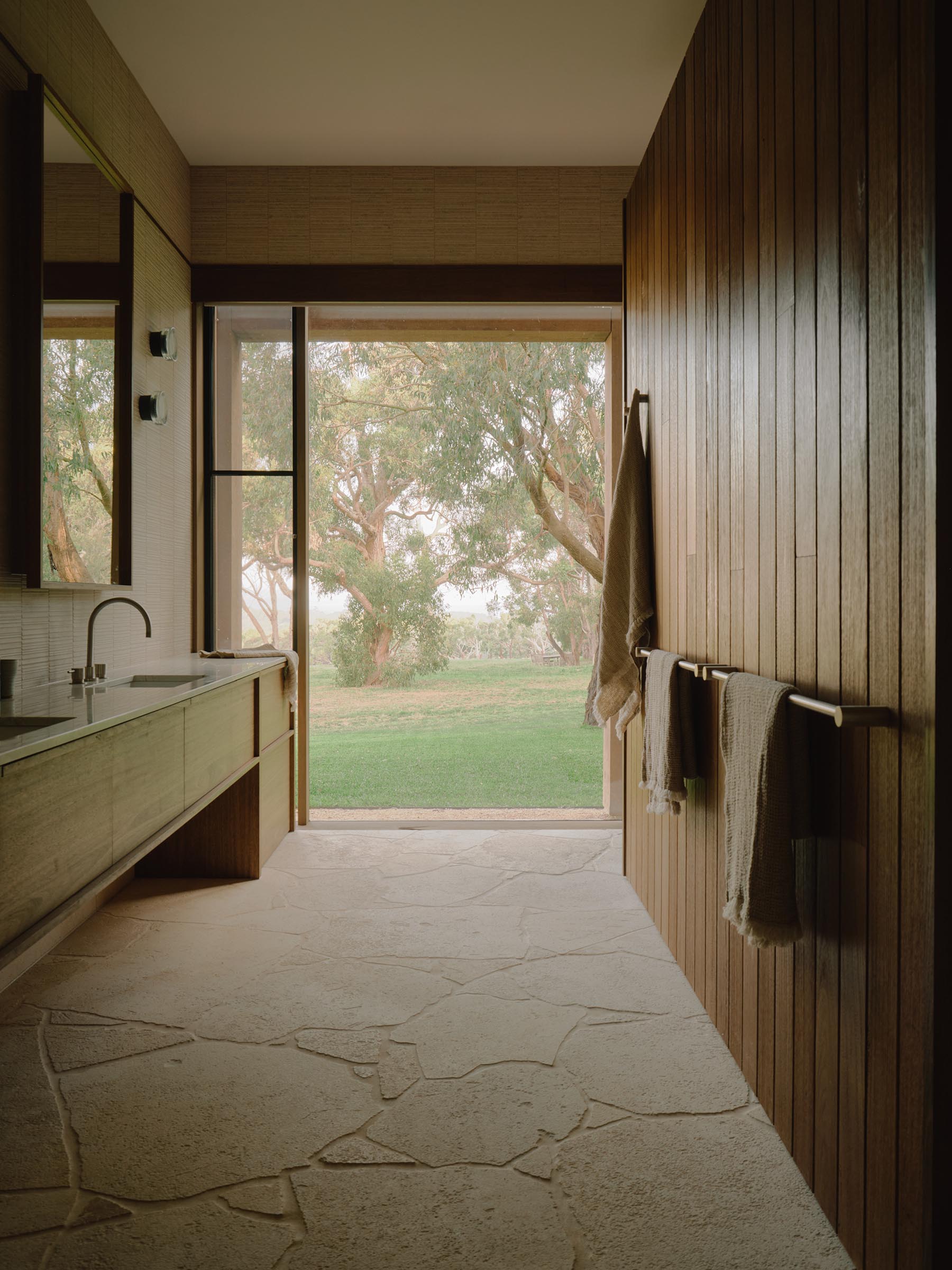
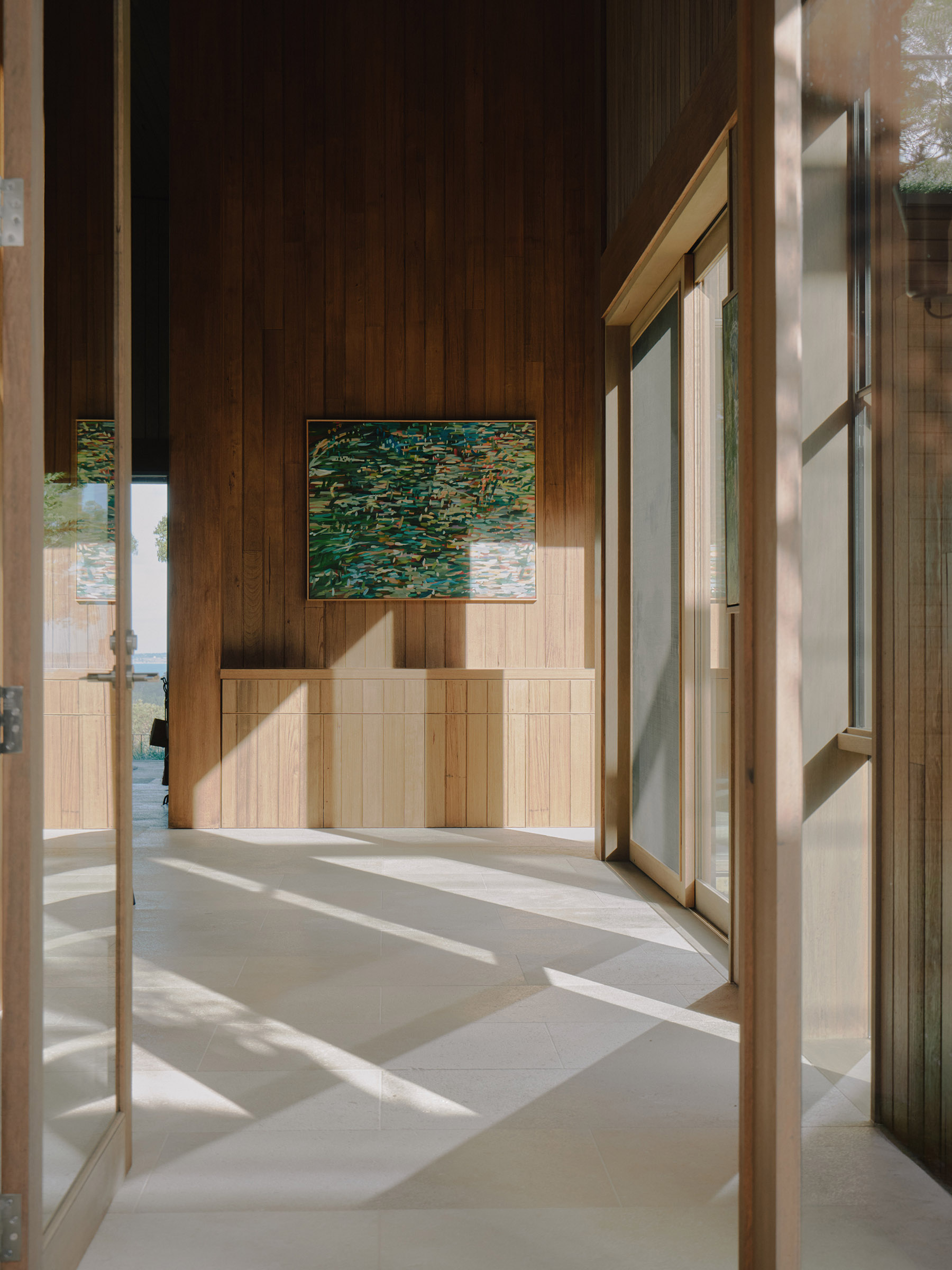
The envelope is a treatment in panels, many of which are glazed, many of which are solid timber cladding, expressed both horizontally and vertically. Openings are means of capturing views, either down into the pasture or up into the tree canopy, framed outlooks that accompany each journey around the home as sources to receive natural light. In all cases visual connections with the exterior, many of which become available from deep within the floorplan are conscious inclusions to the design.
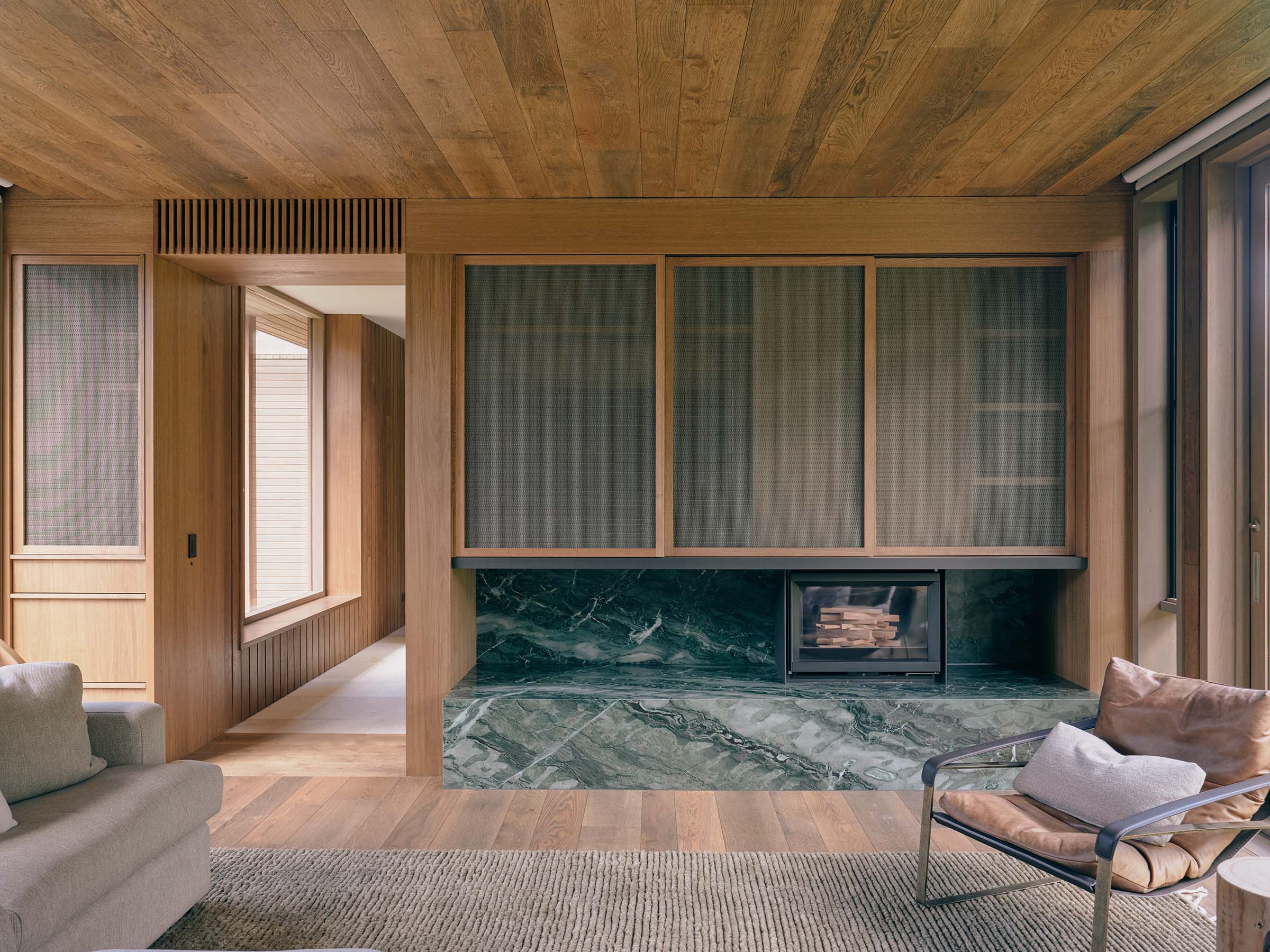
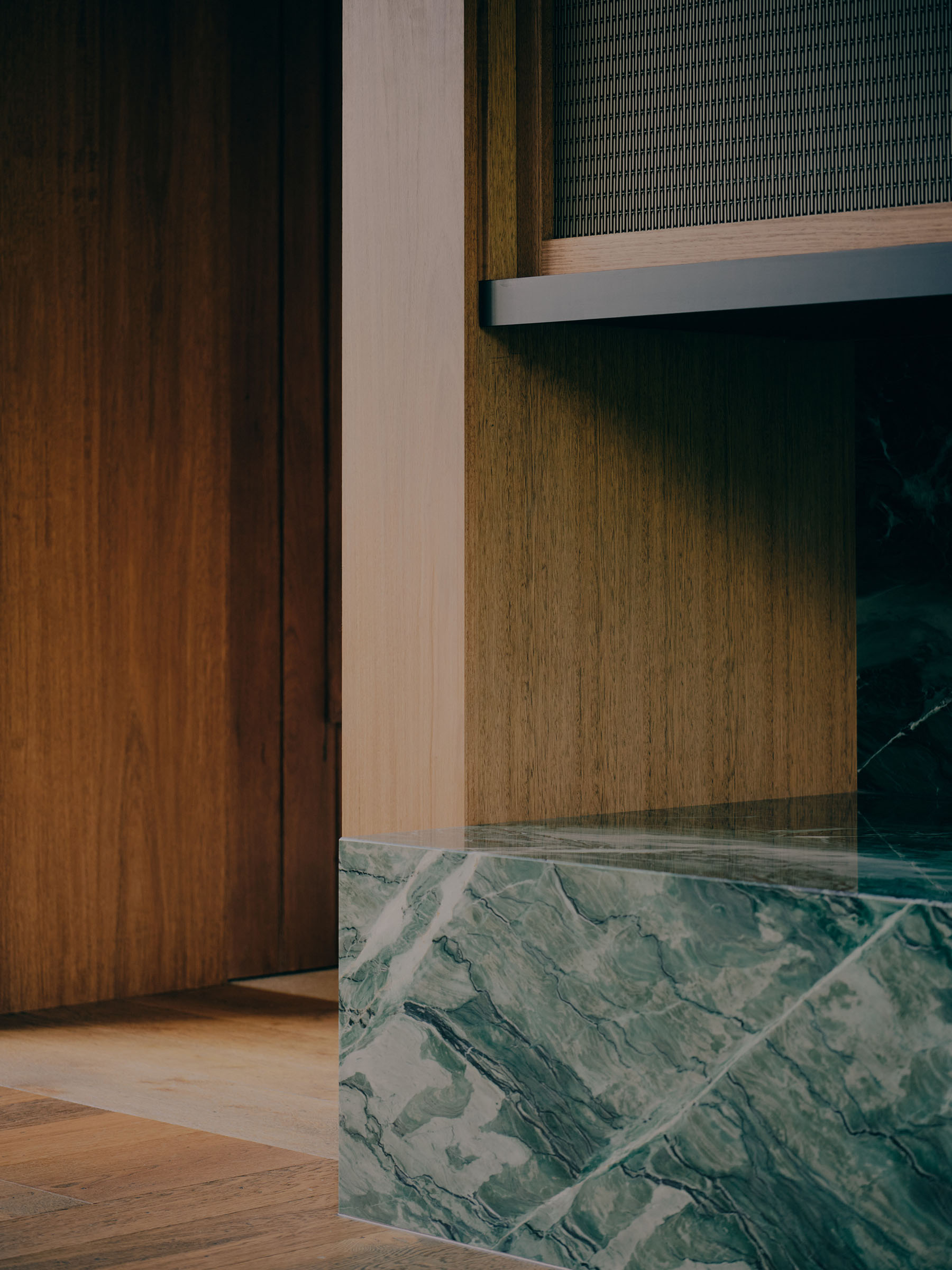
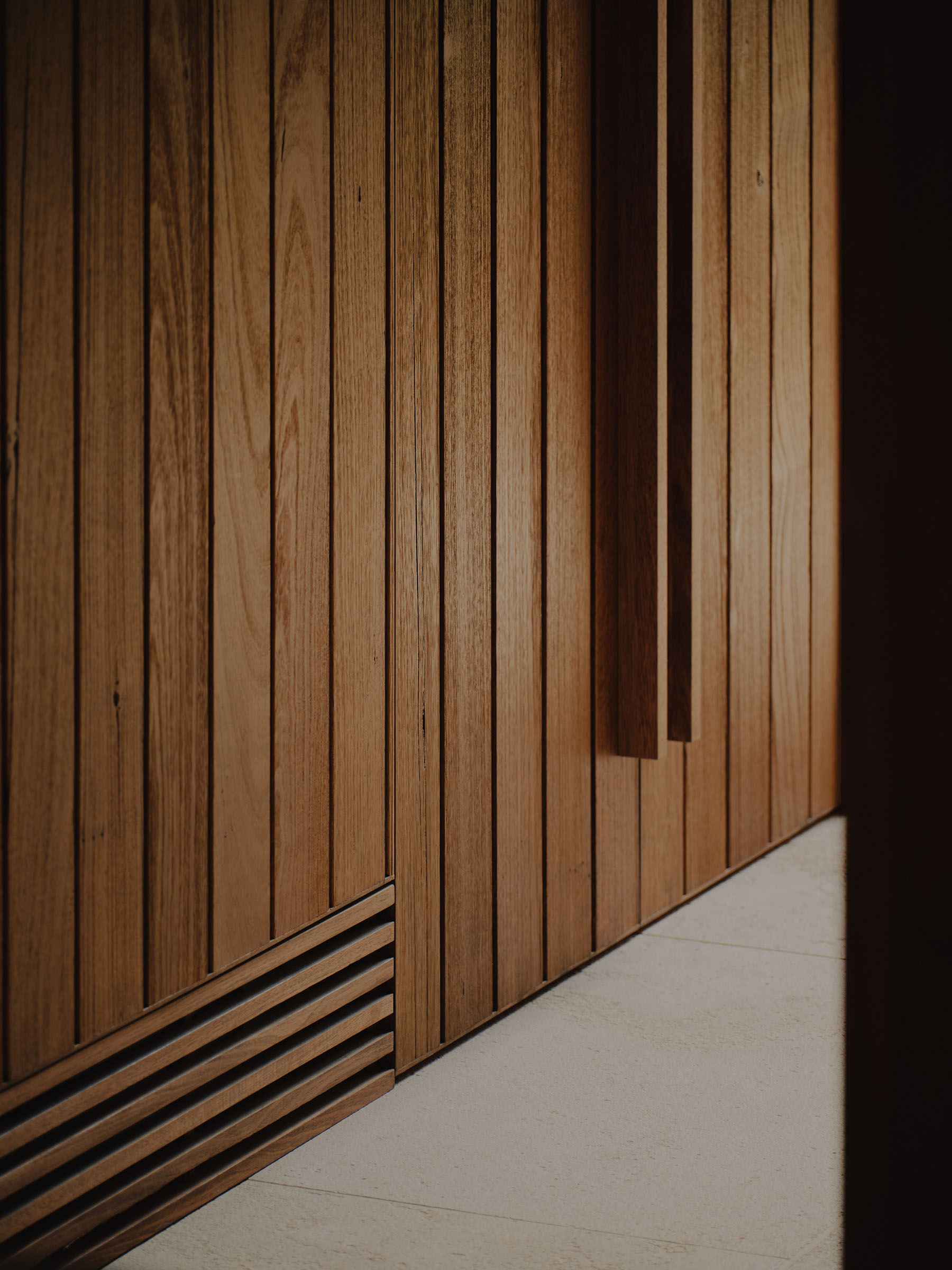
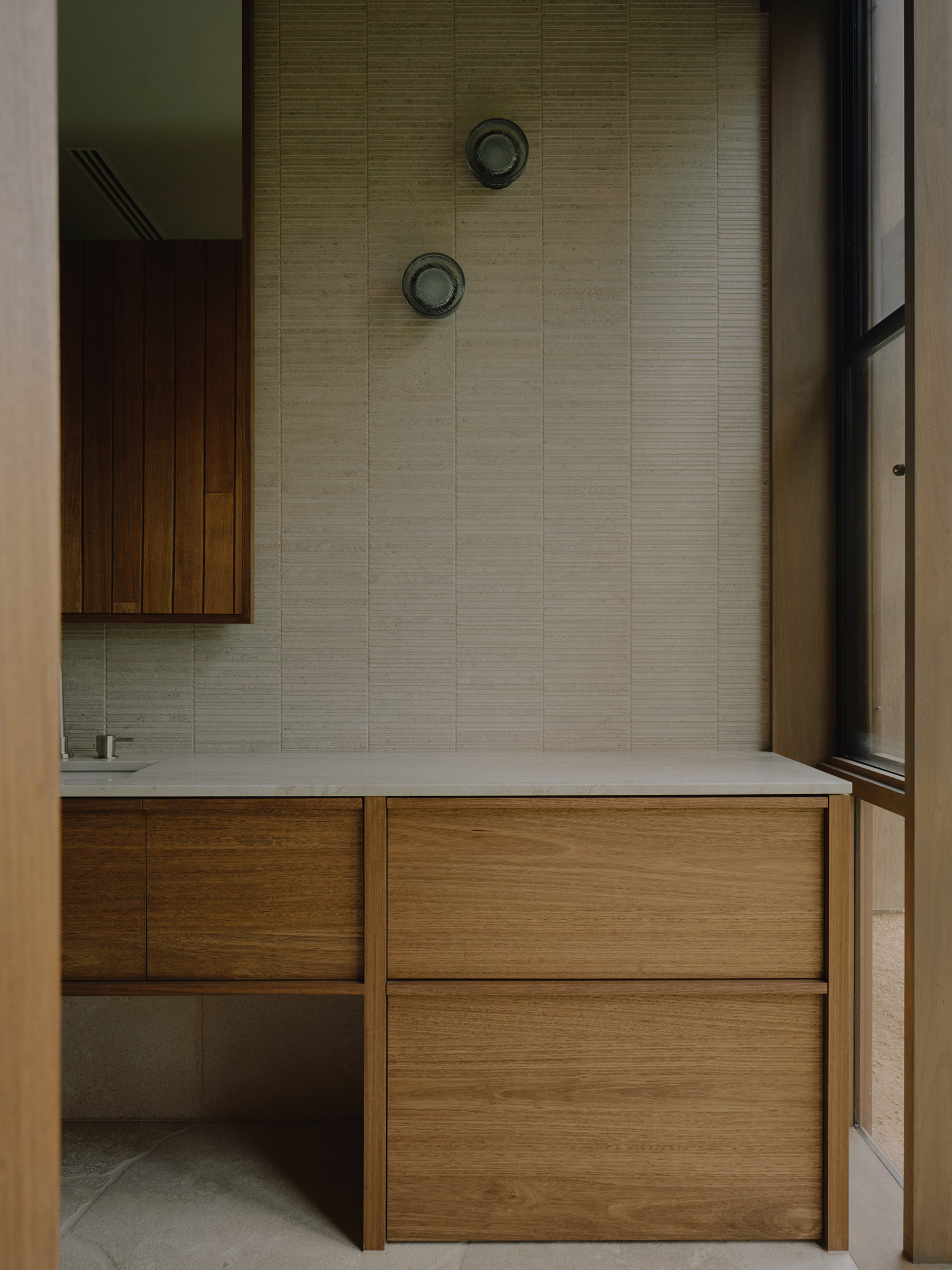
Further notions of grounding are influenced through the use of tactile materials internally as well as externally. Handmade craftwork is on display as a reminder of what took place, what transpired to bring this home to life. All of these notions carry the ongoing influences of how we focus our work to create homes that help make people feel good.