The Cove
Amy Robertson
A cove: a small, sheltered inlet or bay; a recessed, protected place.
The Cove is a family home in Torquay, designed by Director Will Smart for his young family.
In November 2024, Will and his wife Ash made the decision to move their family out of Melbourne - without knowing exactly where they would end up. What followed was a whirlwind of searching for the right site, designing, documenting, pricing, refining and building, alongside countless decisions and the collaboration of many talented people. There was excitement and anticipation, moments of uncertainty, construction challenges, and the inevitable stress that accompanies creating a home from the ground up. 13 months later, in December 2025, Will, Ash, Frankie and Huddy moved into their new home.
At its core, The Cove is an exploration of family wellness. Whilst wellness is often associated with cold plunges, saunas and pilates, for Will and Ash the project became an exercise in understanding how the family home itself can support wellbeing. How can architecture reduce friction, create moments of calm, encourage connection, and positively shape the rituals of everyday life?
Throughout the process, the project remained deeply personal. Regular site visits became part of family life, with the kids delivering baked goods to the trades on site and the occasional Friday afternoon slab of beer making its way to the team. The result is a home shaped not only by design intent, but by the relationships and experiences formed throughout its creation.
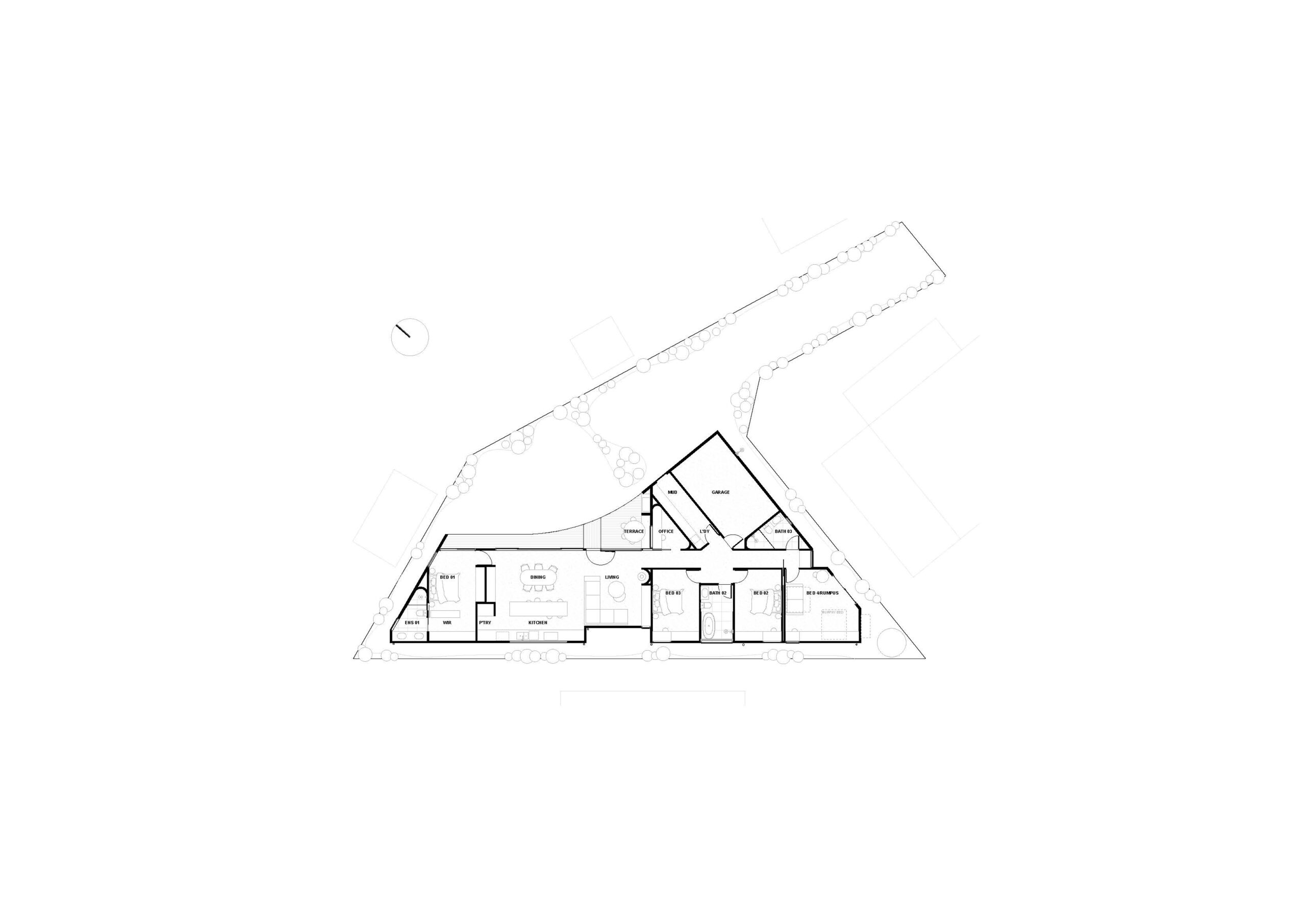
Located on an irregular battleaxe allotment, The Cove is an exercise in spatial economy and a pursuit of "enoughness", shaped as much by financial constraints as by spatial ones.
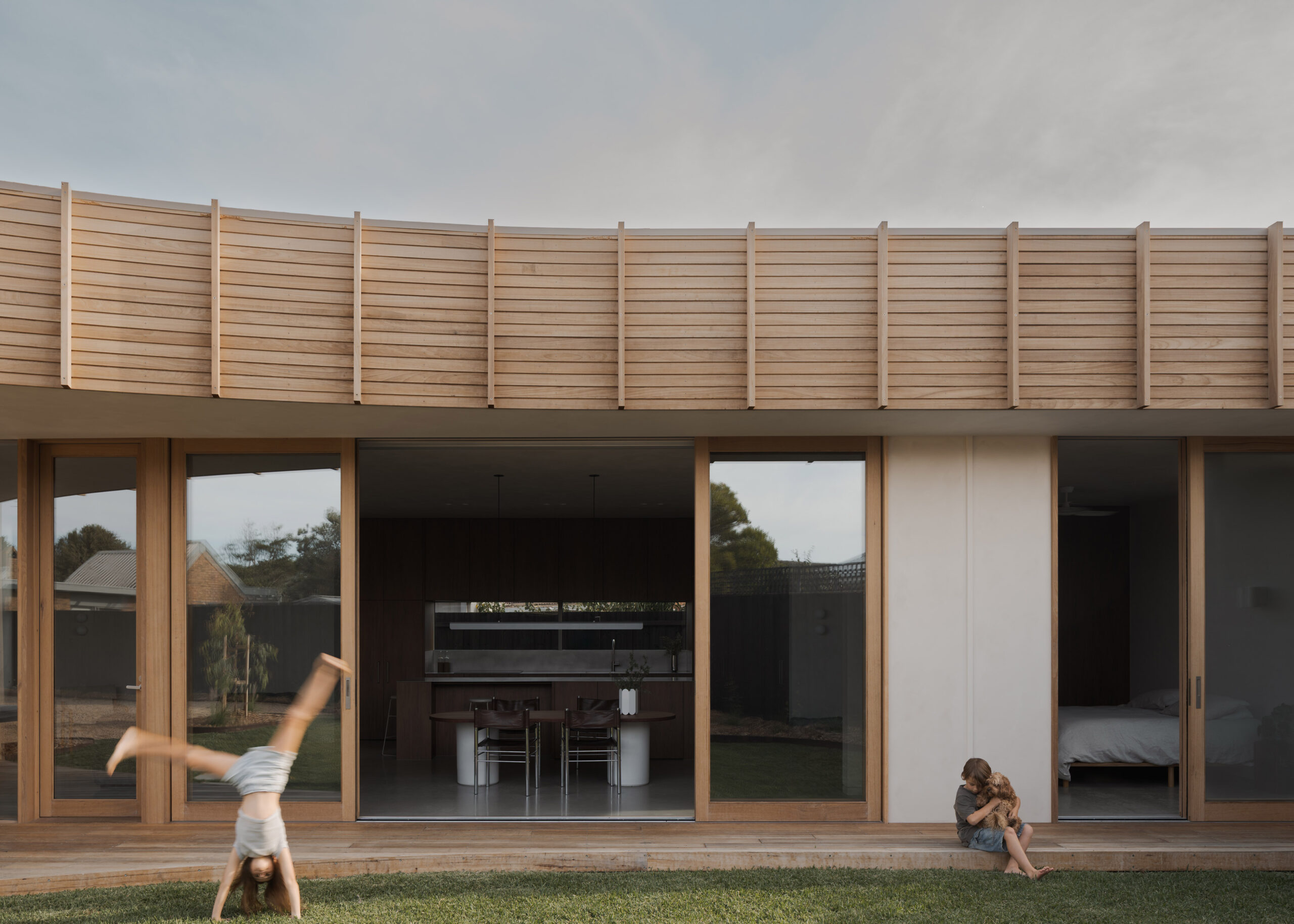
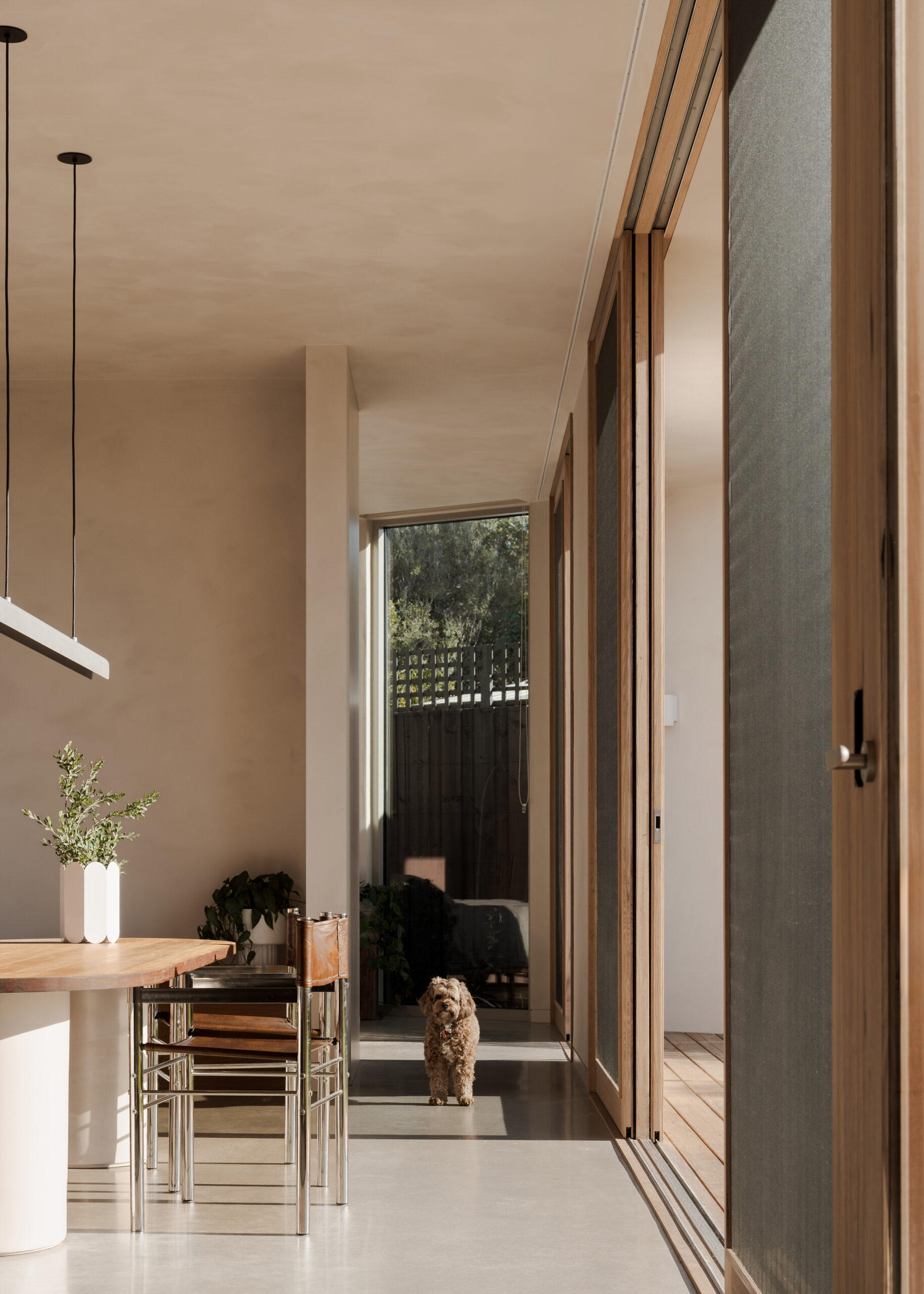
The response is an efficient home containing approximately 180 square metres of internal living space. Working backwards from the site's constraints, and a maximum building area of 230 square metres, allowances were made for a garage, outdoor living areas and landscaping, leaving a carefully considered footprint for the home itself. From there, the plan is organised into three distinct zones: children's bedrooms and a flexible rumpus/guest retreat to one side, the parents' domain to the other. A central kitchen, dining and living space connecting both ends, whilst opening directly to the north-facing garden, maximising sunlight, passive solar performance and everyday connection to outdoor life.
The unusual geometry of the site generated a series of unconventional junctions where the two primary building wings meet. Rather than disguising these moments, they became an opportunity. Secondary spaces including the study, ensuites and storage areas were carefully massaged into the remaining pockets of space, ensuring every square metre performs a role without compromising amenity.
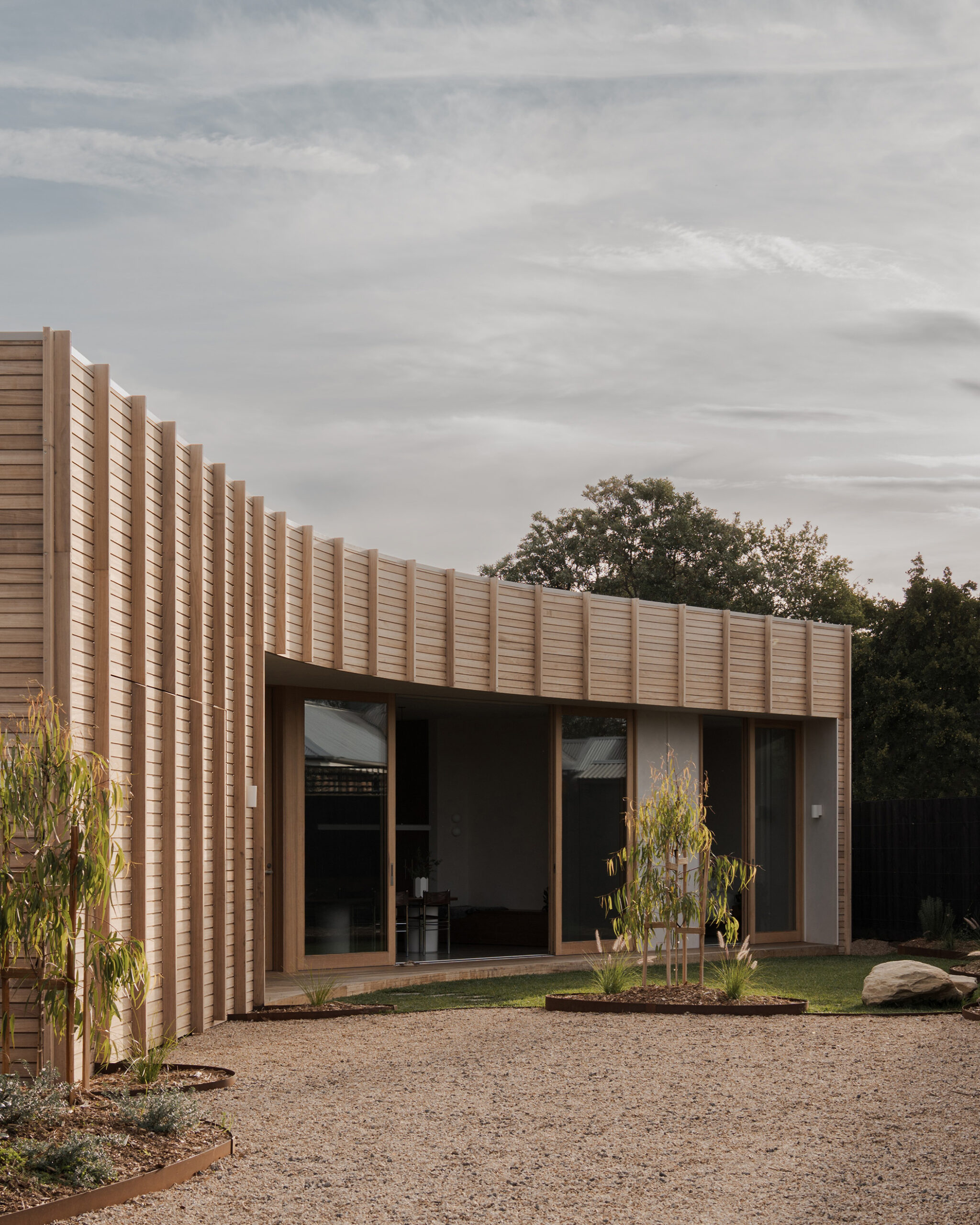
A sweeping curved fascia unifies the forms and creates a sheltered outdoor room at the intersection of the plan. This protected threshold becomes the conceptual and physical heart of the project - the cove from which the home derives its name.
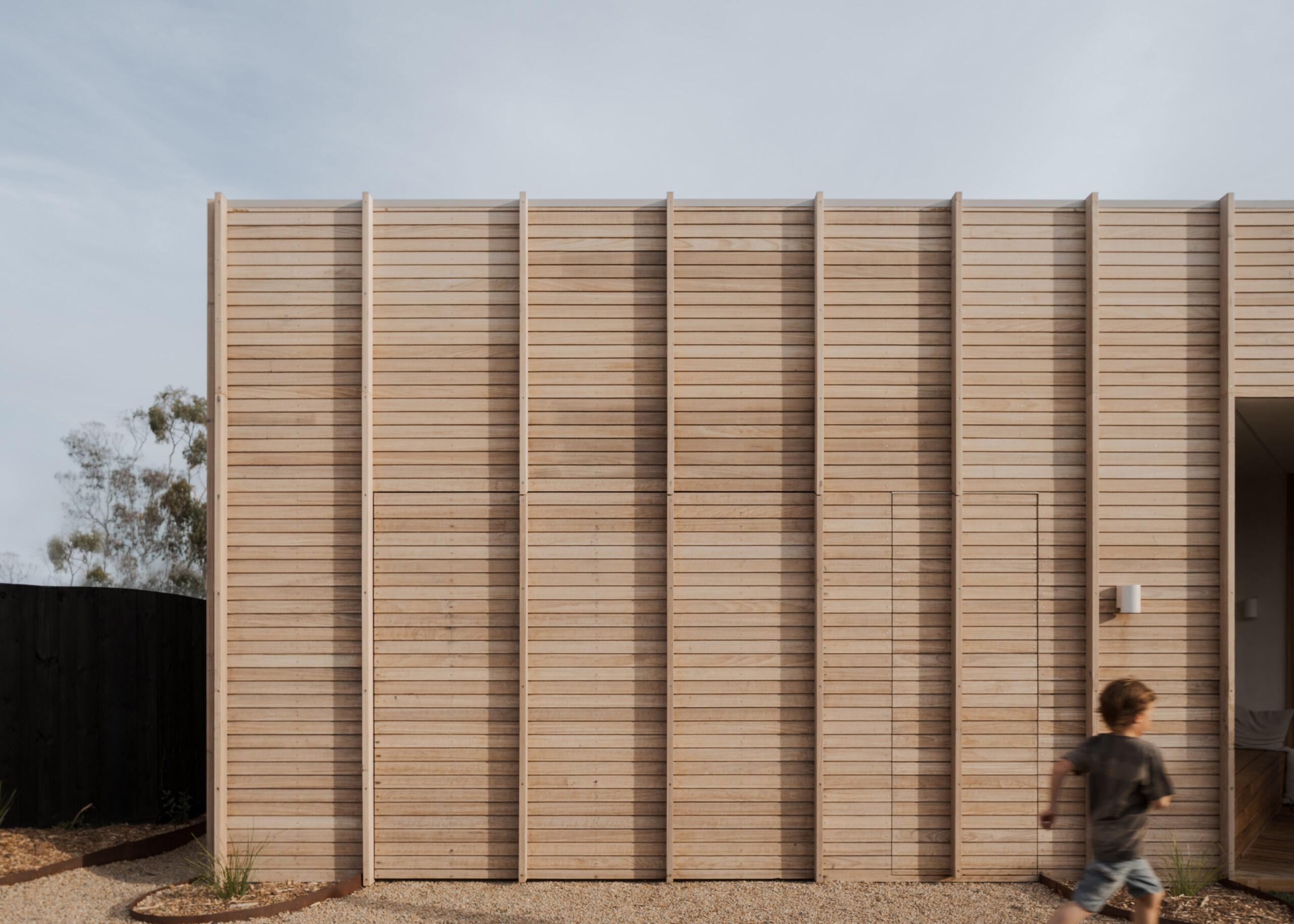
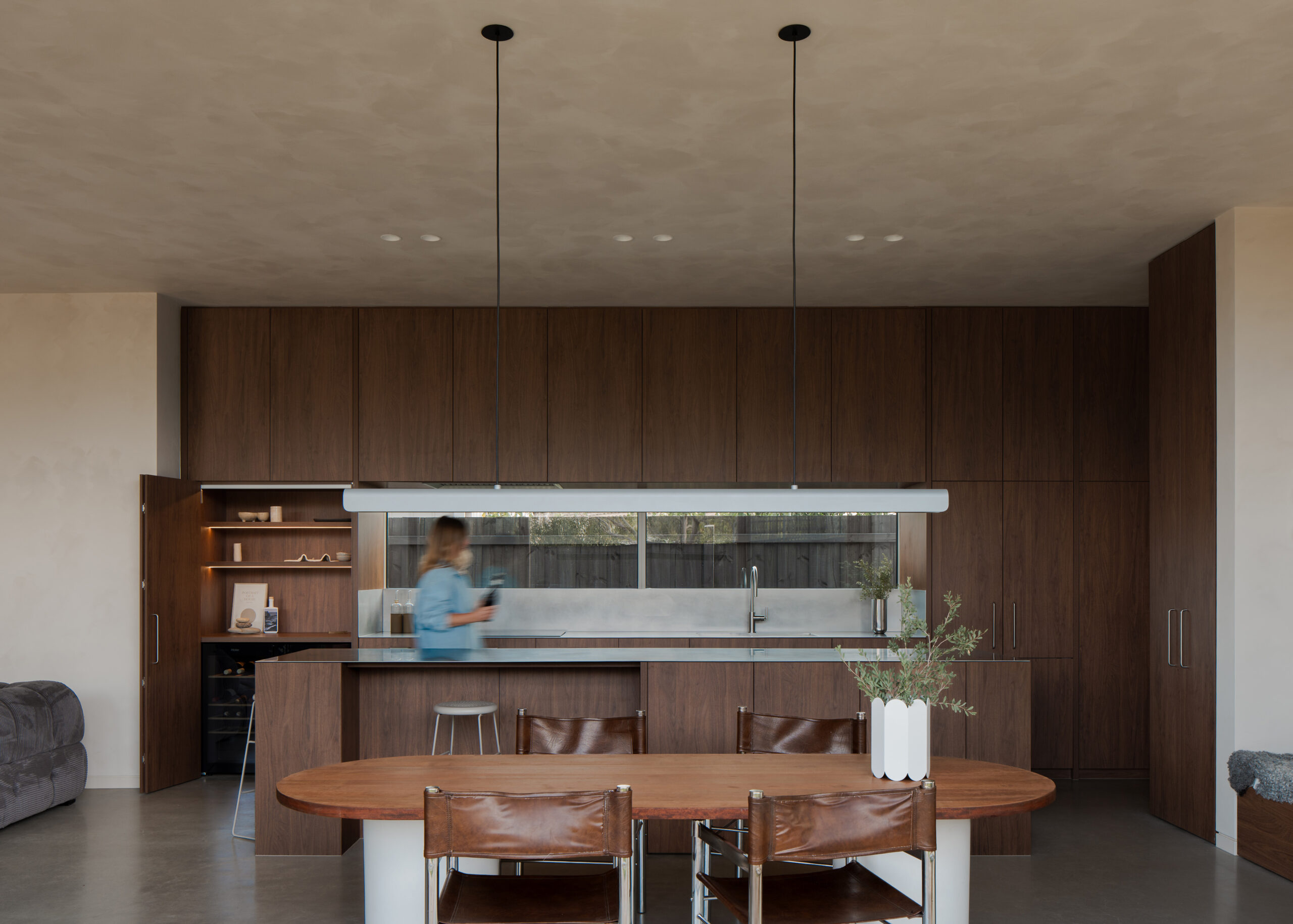
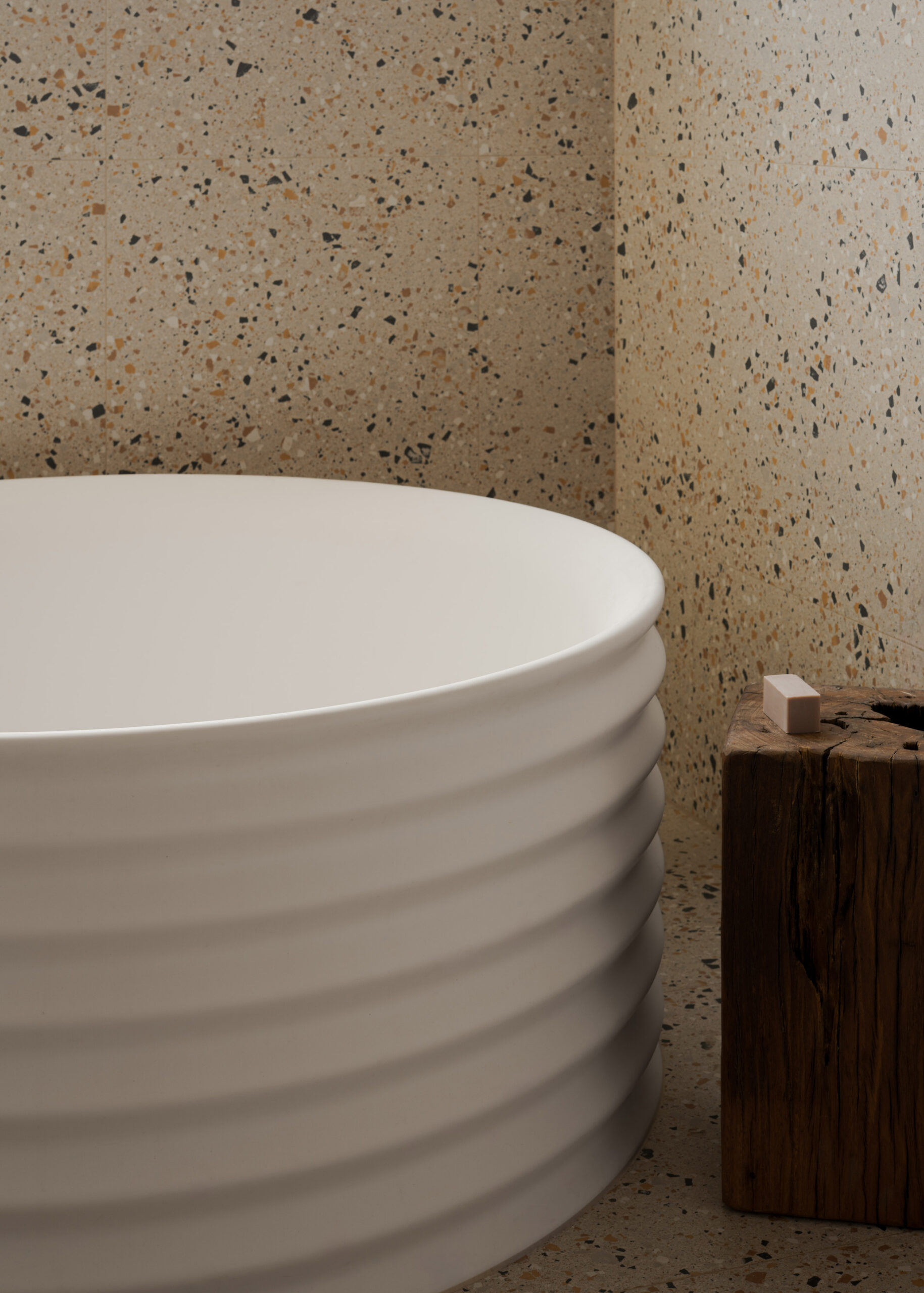
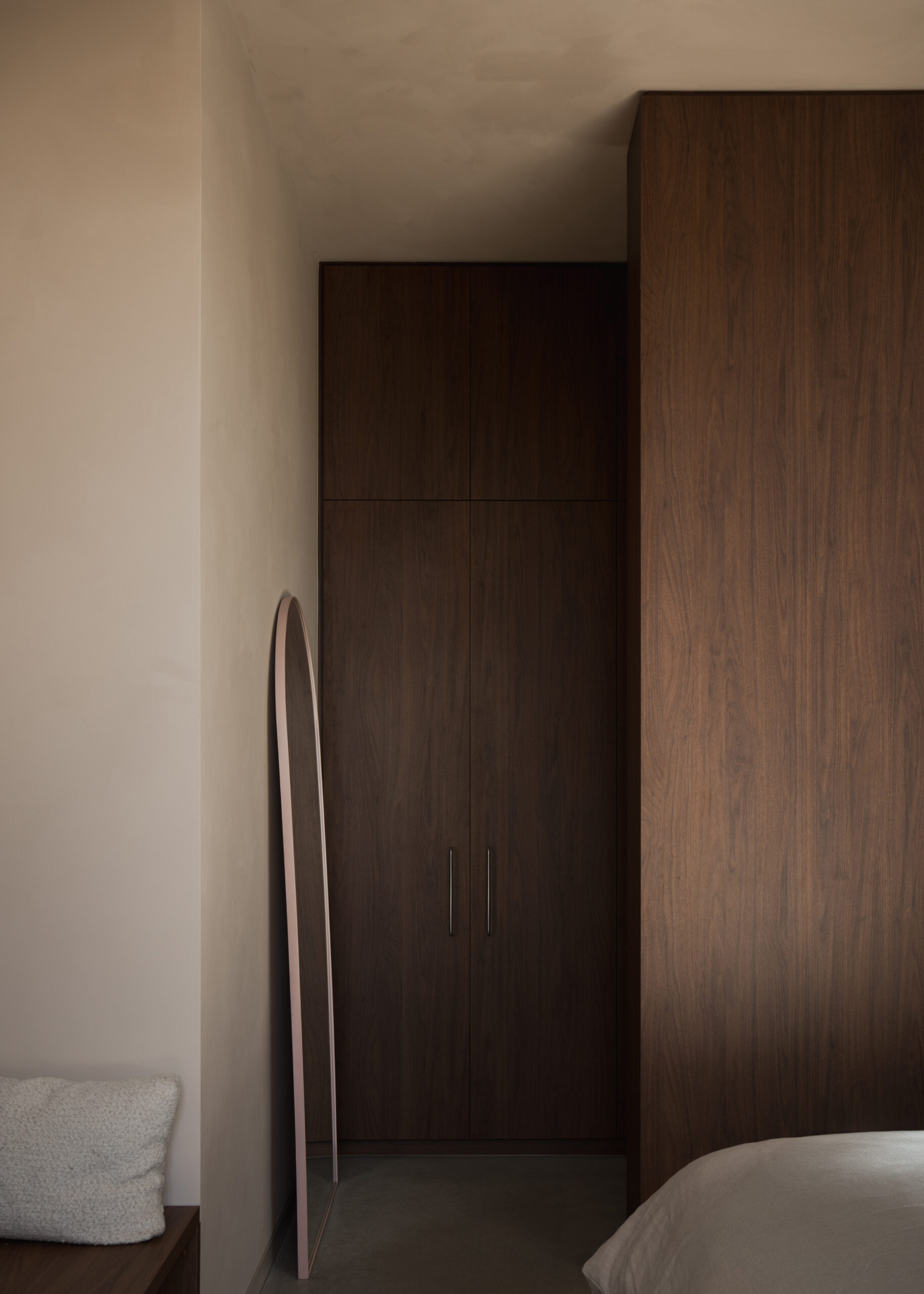
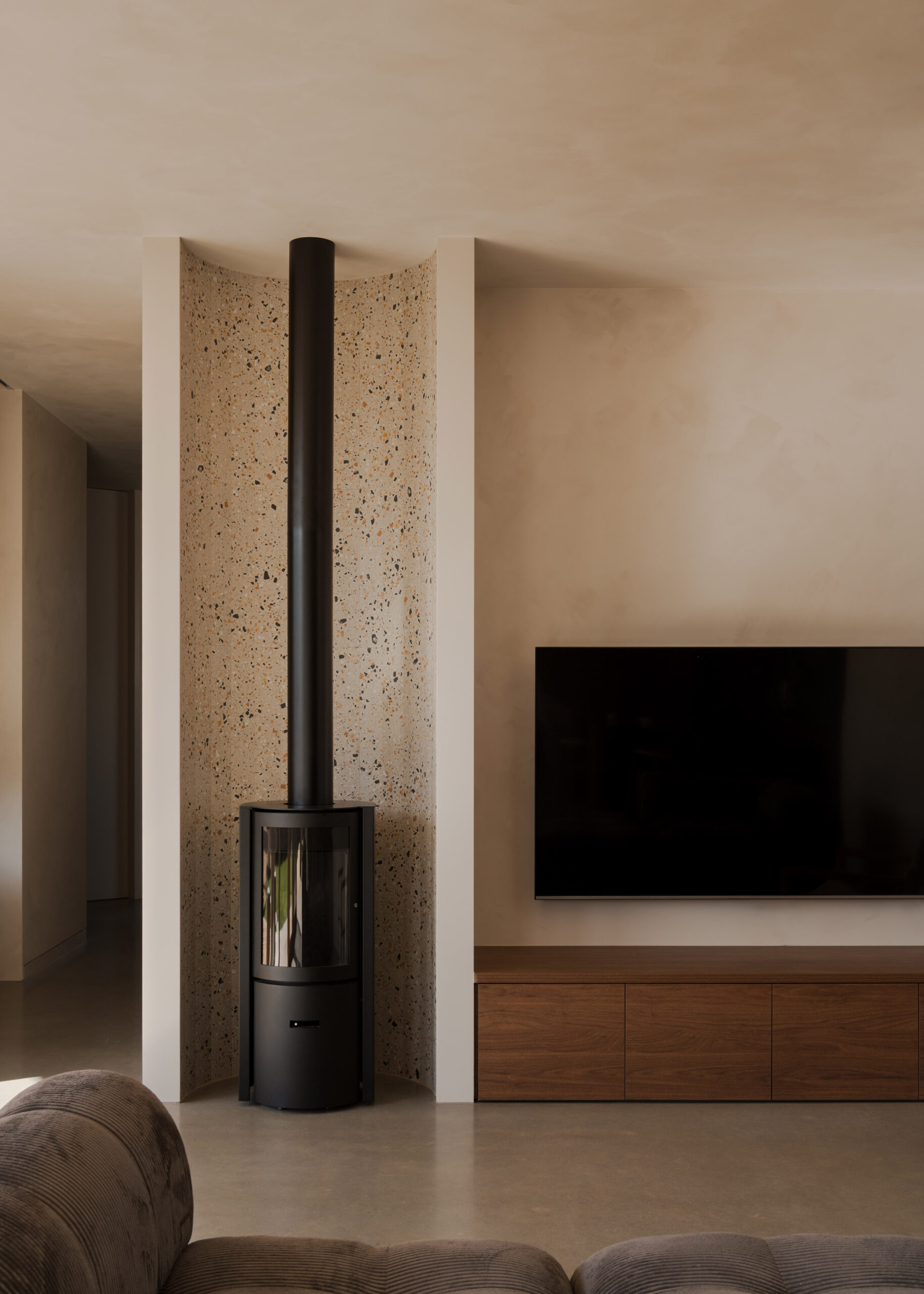
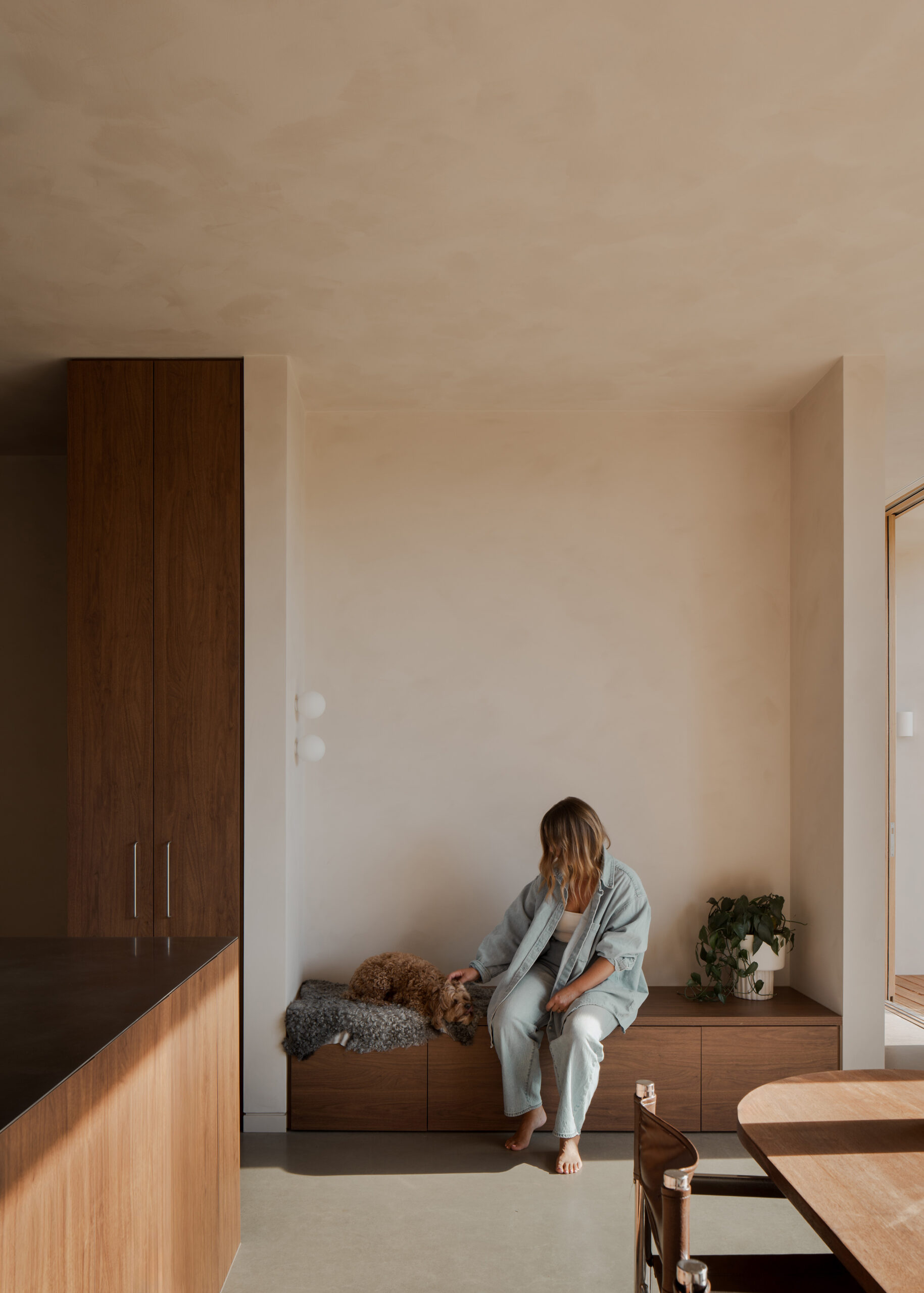
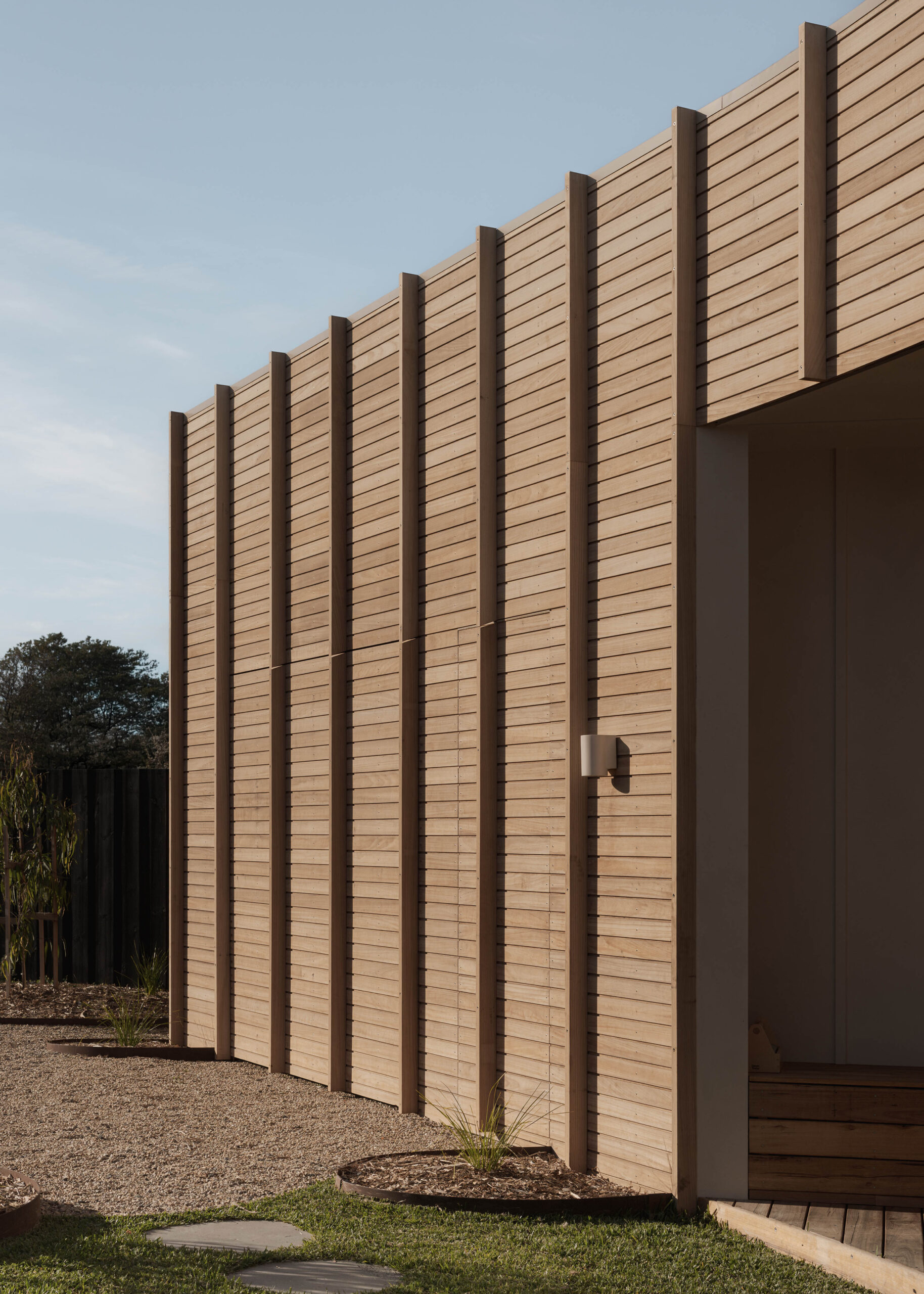
The material palette is intentionally restrained and calming. Timber cladding wraps the primary facade and is intended to weather naturally over time, allowing the home to settle into its coastal environment. Internally, four primary materials establish continuity throughout: walnut joinery, textured paint, polished concrete floors and terrazzo tiles. Each selection was made for both aesthetic calmness and durability, supporting the realities of family life. The textured paint disguises the marks of balls, toys and fingerprints, while the terrazzo conceals the sand synonymous with coastal living. The consistency of the palette reduces visual noise, creating a calm backdrop for daily life and allowing the modest footprint to feel generous and expansive.
Since moving in, Will and Ash have intentionally resisted filling the spaces with artwork, decoration and objects (as much for practical reasons as budget ones!!!) instead allowing the architecture, natural light and materiality to take centre stage. The result is a home that feels calm, uncluttered and restorative.
The project is also a testament to collaboration. From the earliest sketches through to completion, Will worked closely with Tyson Doherty and the team at Doherty Building Group. The relationship demonstrated the power of architect and builder working together with mutual trust and shared objectives. Countless decisions were refined through conversation, balancing design ambition, budget, practicality and craftsmanship to achieve an outcome stronger than either party could have delivered independently.
The Cove is not a large house. It does not rely on excess floor area, extravagant gestures or complicated materials. Instead, it is an exploration of enoughness - asking what a family truly needs. The outcome feels greater than the sum of its parts - a home that demonstrates how thoughtful design, restraint and collaboration can create a richer way of living without excess.