Grounded House
Laura Tindall
Lilliana Sierra
Katie Petros
The coastline of St Andrews Beach is an untamed force of nature. Oriented to the southwest, this rugged piece of foreshore is prey to the wildest of conditions that Bass Strait offers, belting winds, huge swells, blisteringly hot summer sunsets and extreme fire risk. Much beauty exists in these raw elements.
At the core of the human condition is a desire to engage with such places, to experience nature at its fullest. As humans, we grapple with and seek permanence, and as we set out to live our lives in environments that can be described as both beautiful and inhospitable, notions of shelter and protection resonate.
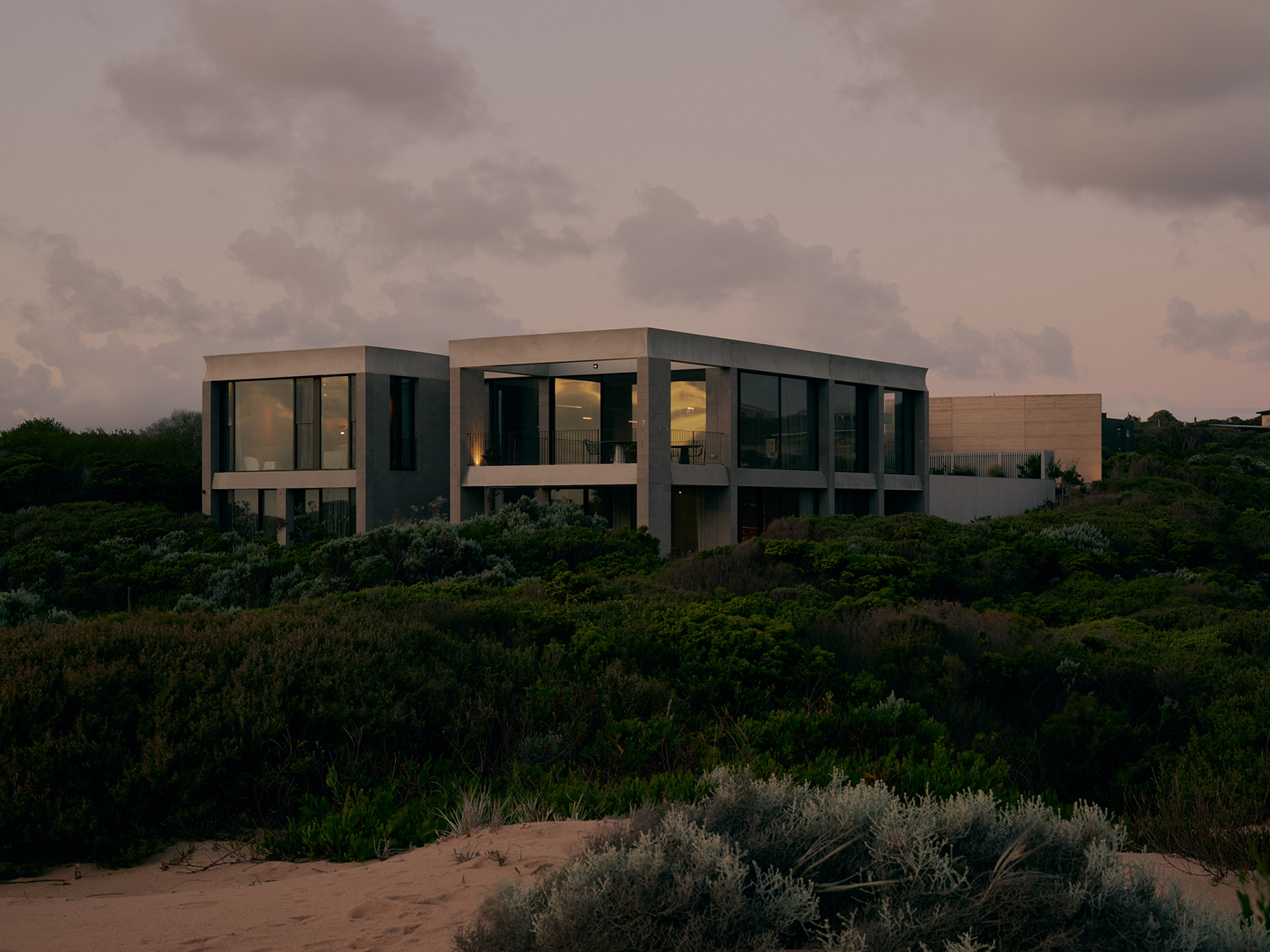
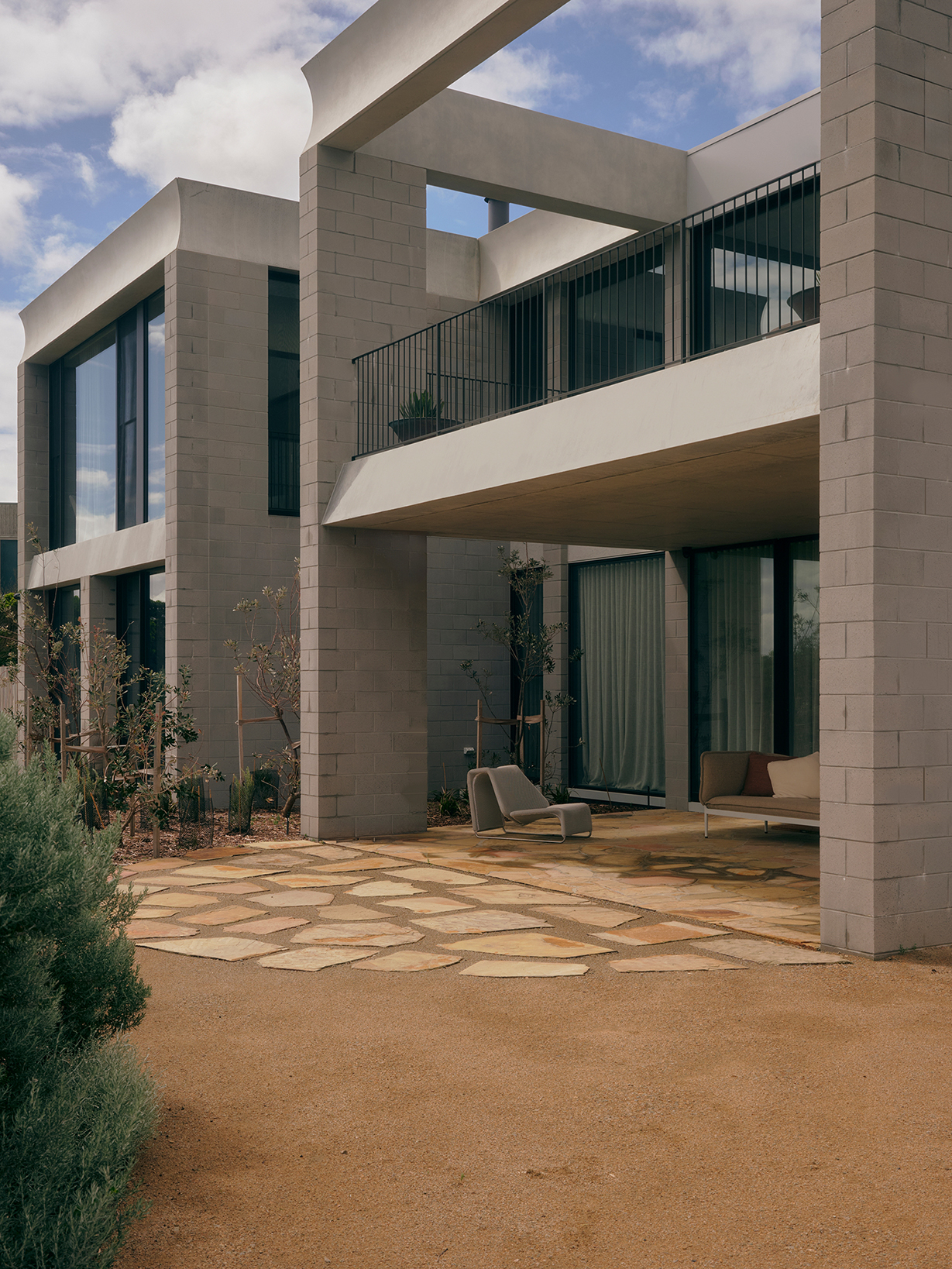
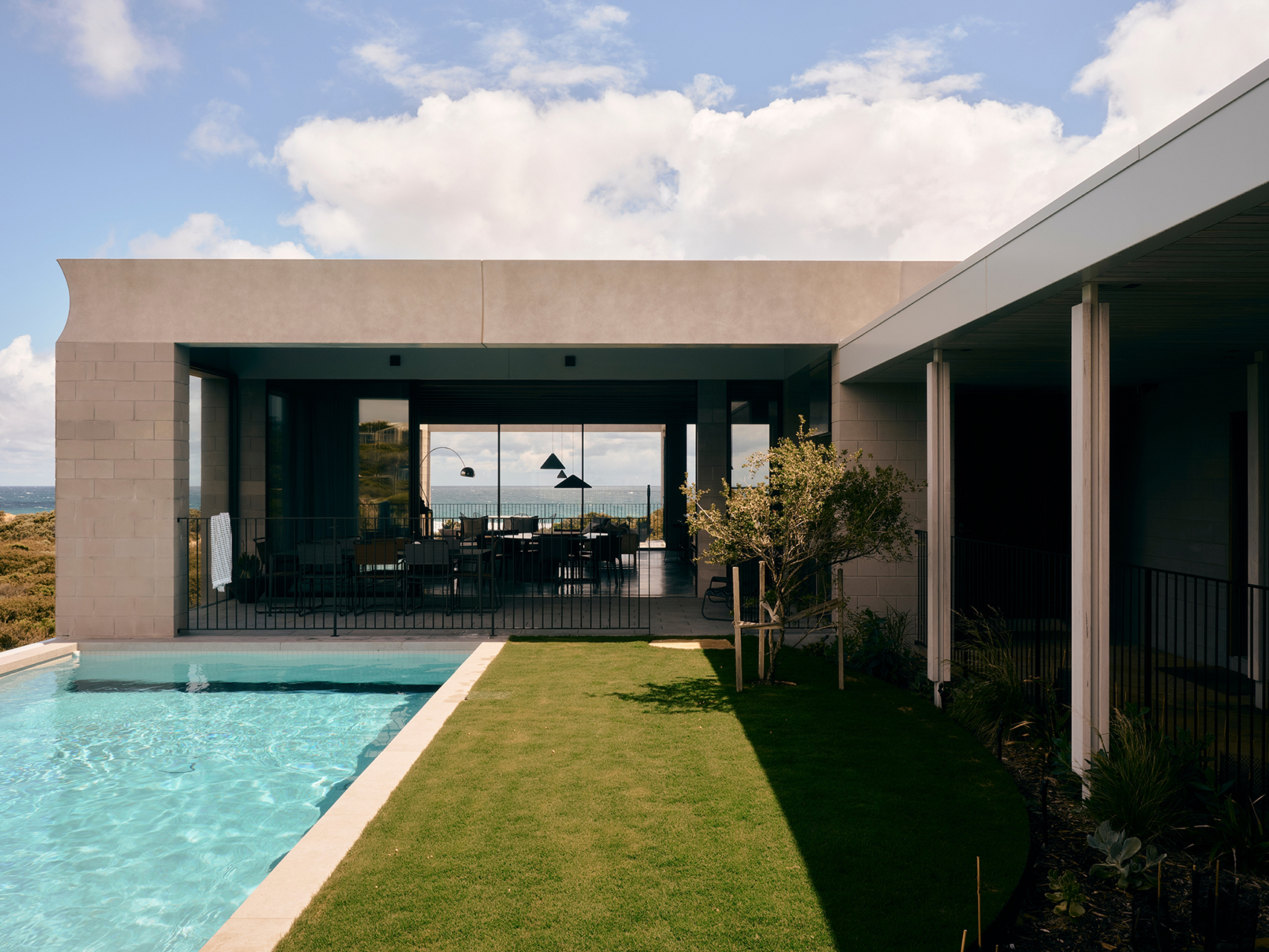
Nestled within the sculptural shaped dune just metres from the shoreline sits Grounded House. Not unlike community structures such as the much-loved surf club, this home is constructed from an honest skin of face blockwork and is capped by a delicately inverted concrete parapet. Over two levels this home faces the elements square on, providing a platform to view, appreciate, experience, and interact.
Through over 25 years of honing skills in delivering buildings in extreme environments, Wolveridge Architects have learned of the critical need for the creation of multiple external recreational spaces around a home. Protected spaces that extend living areas into the landscape, from multiple aspects, ensuring at least one space is usable in any condition. The trick is to preserve the occupants’ outlook from each, so as not to create feelings of disconnection, but to reinforce a oneness with the surrounds.
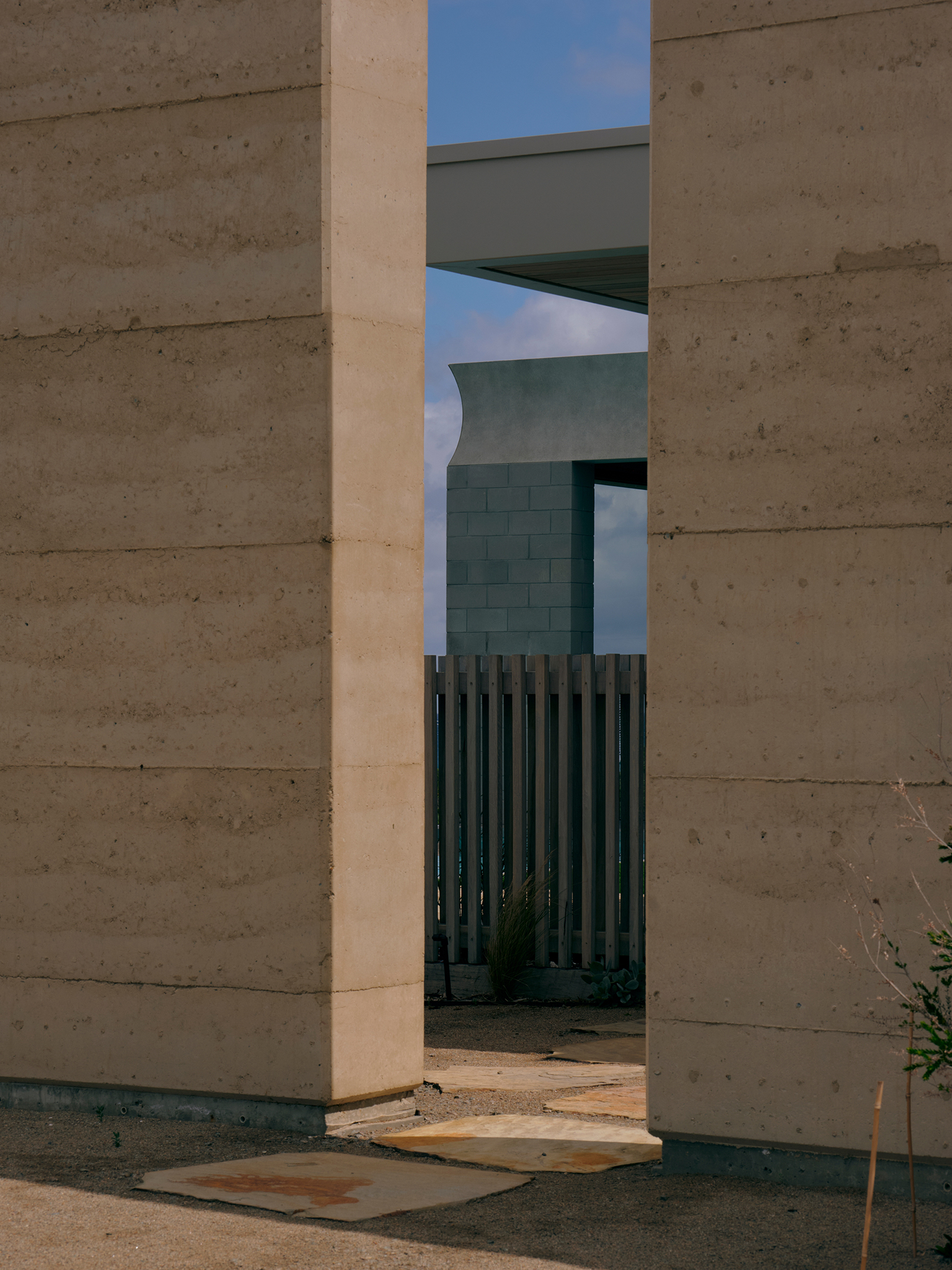
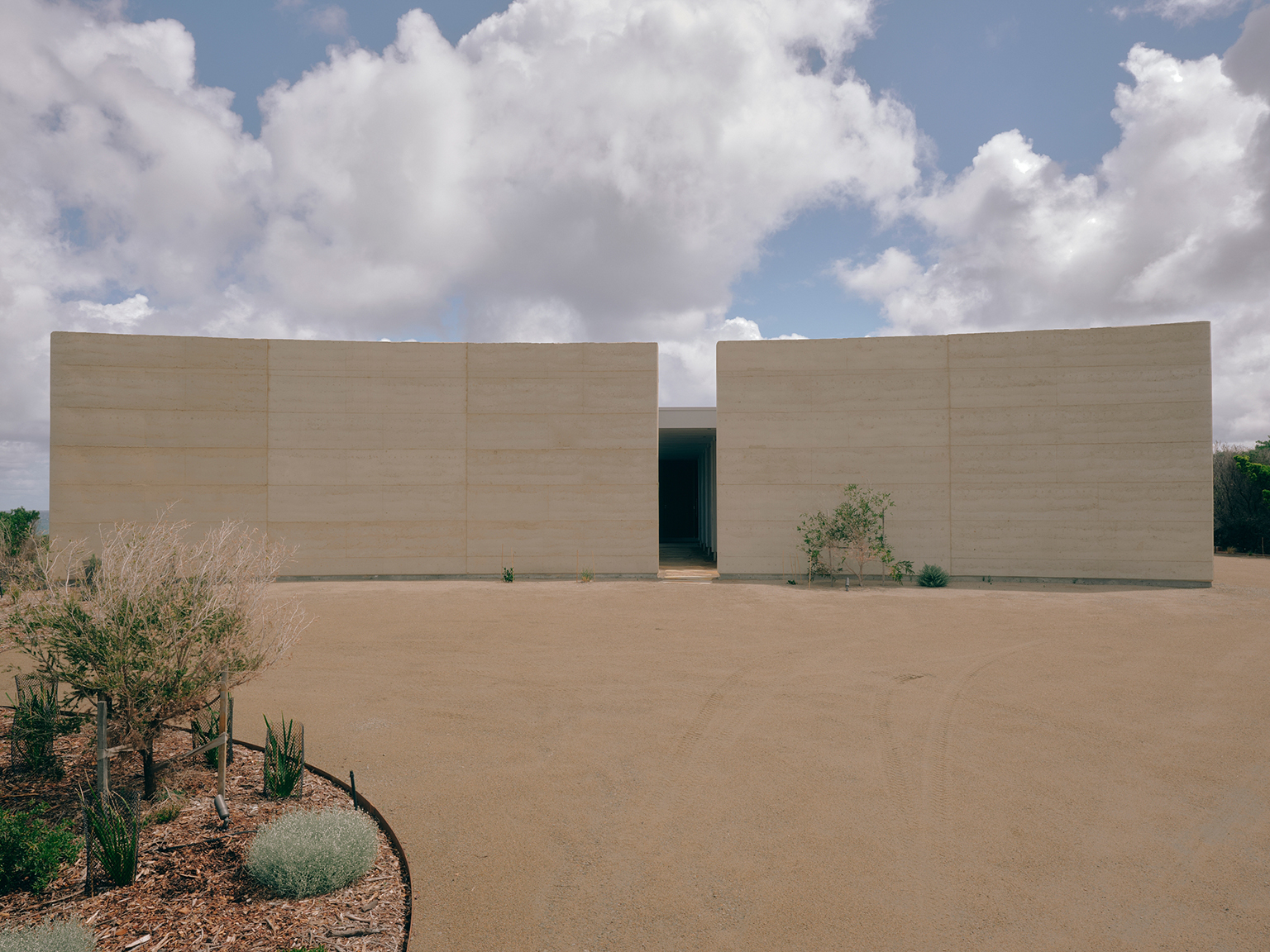
Grounded House seeks to offer such a range of spaces, particularly at its upper ground level. From the point of arrival visitors are initially confronted by a large, unadorned rammed earth wall, with simply a narrow aperture as a point of legibility. This ‘ruin’ is a device not just to build anticipation in what lies beyond, but to mask the existing conditions, mainly other dwellings in the hillside of the far background when viewed from the living room’s rear windows. The ground floor terrace is a secluded place to relax – away from the wind and surrounded by the bush, nestled amongst nature.
Beyond the ruin is a gated point of covered arrival alongside a protected swimming pool and landscaped area. From this space, the guest is linked to the primary view, either diagonally beyond the pool or through the home itself. This is a peaceful location, somewhat protected from elements where reflective outlooks in addition to the panoramic are offered. These include back views, glimpses into the tea tree landscape below and around. Beyond the living space which fronts the ocean, an unprotected terrace is open to the sky, and every conceivable element, overlooking an ancient dune structure and ocean wilderness.
Influenced by a lack of formality, there is no single point of entry, the arrival process is unpretentious. Is it a gate? Is it a door? Enroute, the visitor bypasses by the pool. This leaning into the unceremonious is a means to get real, to kick off the shoes and leave it all behind.
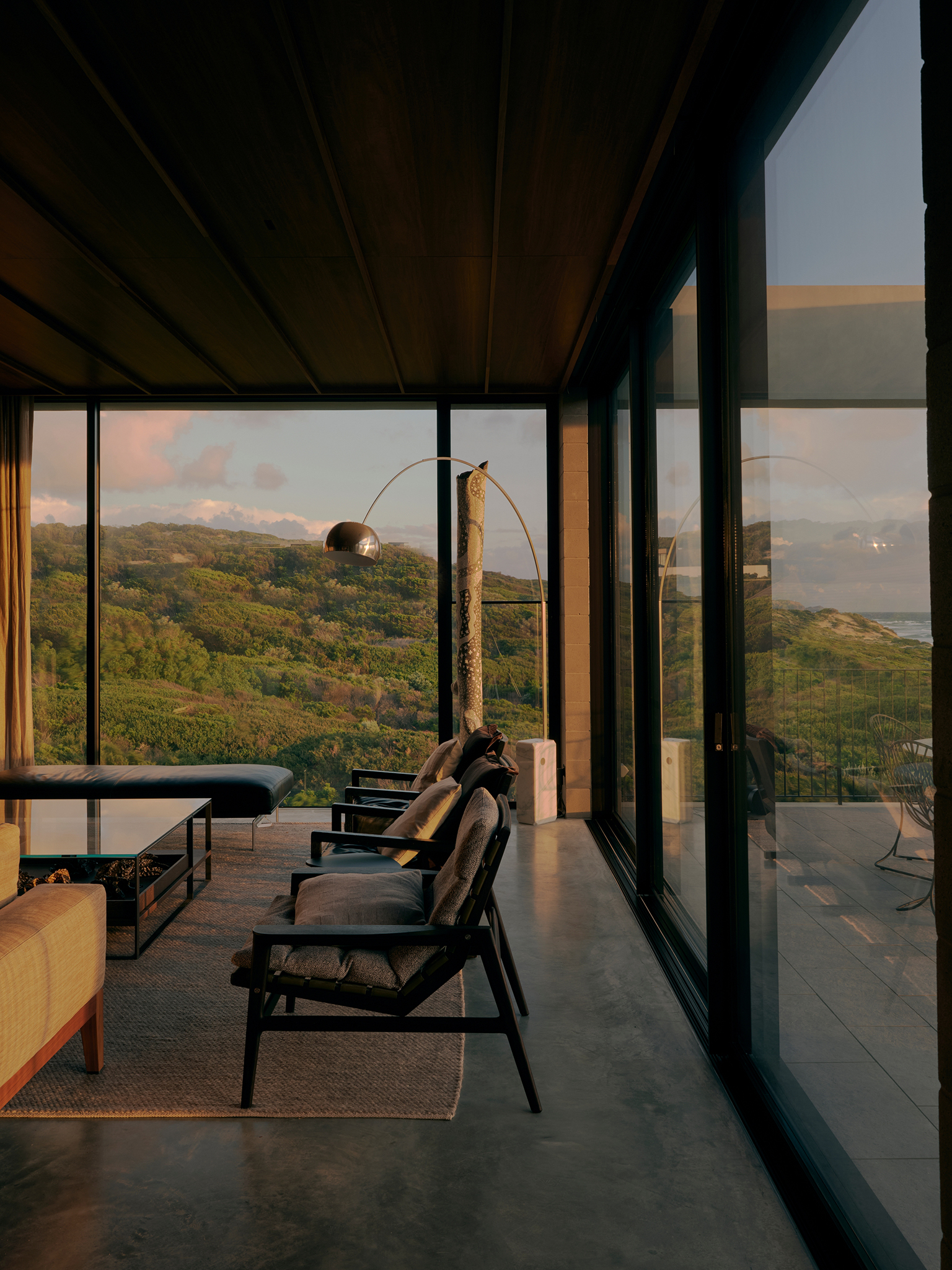
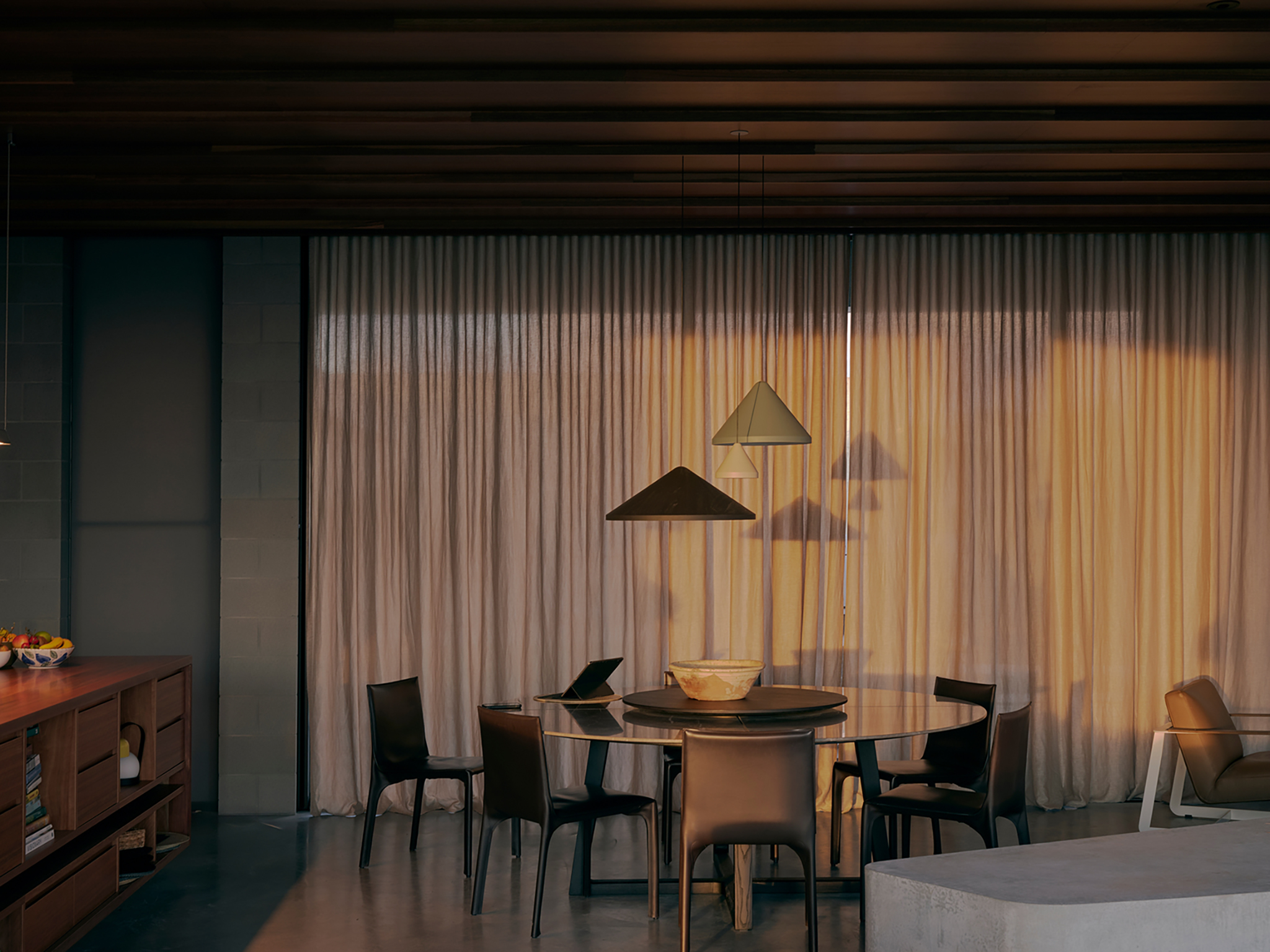
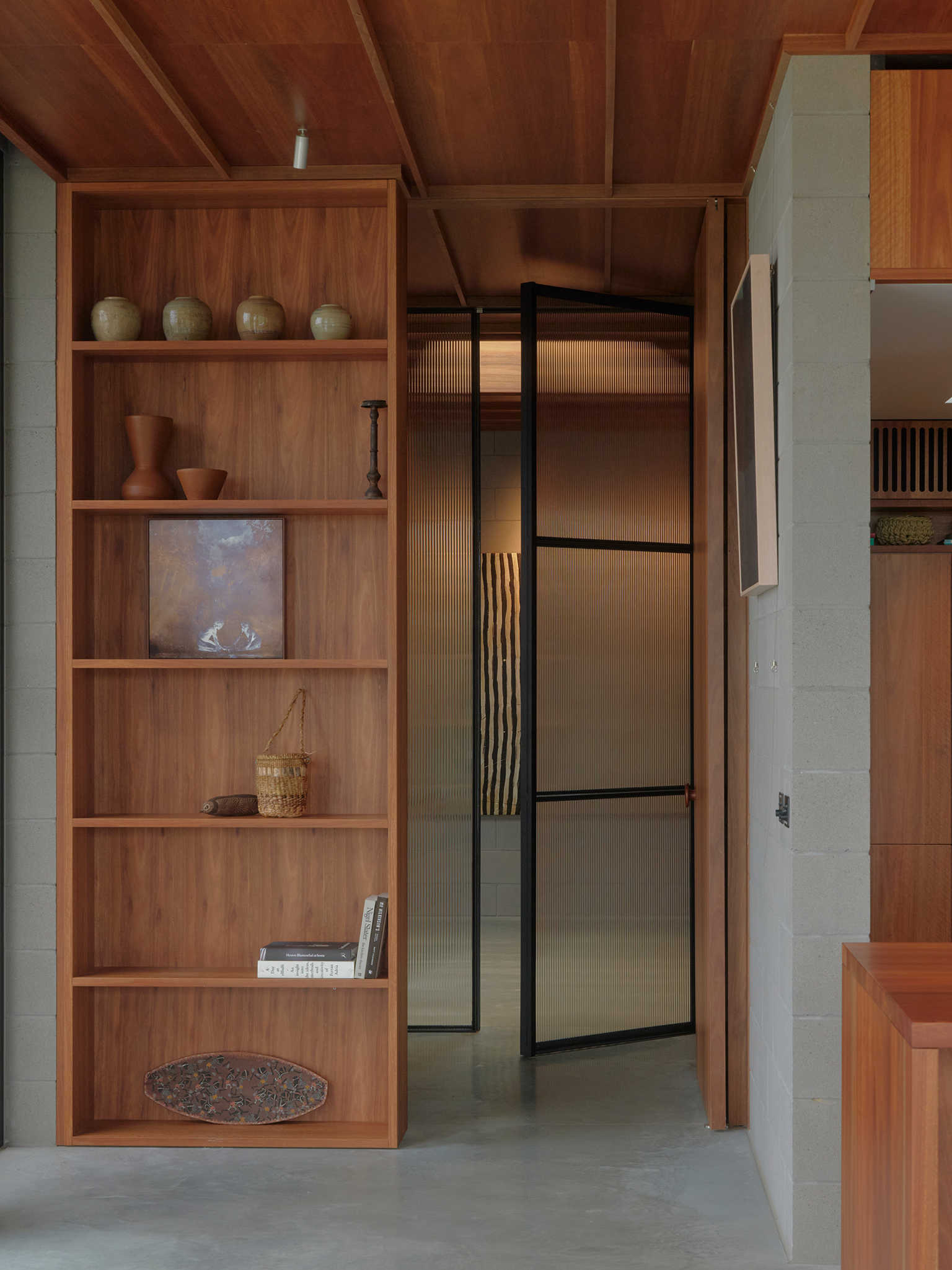
Within the home we are conscious to remind the occupant of the protective nature of the building’s rugged skin. An insulated internal face blockwork skin dominates the interior and elevates the comfort offsetting the huge expanses of glazing and providing an abundance of thermal mass. Together with burnished concrete floors spotted gum, timber is employed, expressed through ceilings and joinery. Stainless steel, concrete, and mirror complete the robust palette. Design elements are less about curation and more about practicality, offering a tactile yet protective interior.
Over two levels, a range of living spaces and sleeping areas have been configured to support the inestimable nature of the summer visit, of the kids and their mates, extended family, the anticipation of future grandchildren, friends and beyond. Window placement is all about capturing an outlook and providing a place for fresh air to pass.
Extensive internal thermal mass and the provision of cross-ventilation pathways through the home at both levels minimise the reliance of mechanical and cooling means. This summer’s extreme temperatures have tested the home in its first season with the upper-level mechanical cooling only required on a couple of rare still days. Through last winter, the reliance on hydronic heating has been minimal due mainly to the thermal mass and use of blinds with high performance windows minimising heat loss.
As the coastal scrubland begins to re-establish itself around the home, it is anticipated that the building shall develop its own patina. Concrete, timber, and rammed earth elements will weather over time, reinforcing this dynamic link between building and site – as Grounded House continues to offer refuge from it all.